Why Is Preschool Education at Home Important?
Preschool education at home is one of the most effective ways to support your child's cognitive, social, emotional, and physical development. Even for children attending daycare or preschool, educational support at home makes a significant difference. Research shows that parental involvement has an even stronger impact on a child's academic success than the school itself.
- Individual pace: Every child learns at their own speed. At home, you can adapt to this pace.
- Safe environment: Home is the learning environment where children feel most comfortable.
- Bond strengthening: The process of learning together deepens the parent-child bond.
- Flexibility: The program can be shaped according to the child's interests.
How to Create an Effective Home Education Program
Creating a successful home education program requires following specific steps:
Step 1: Create a Daily Routine
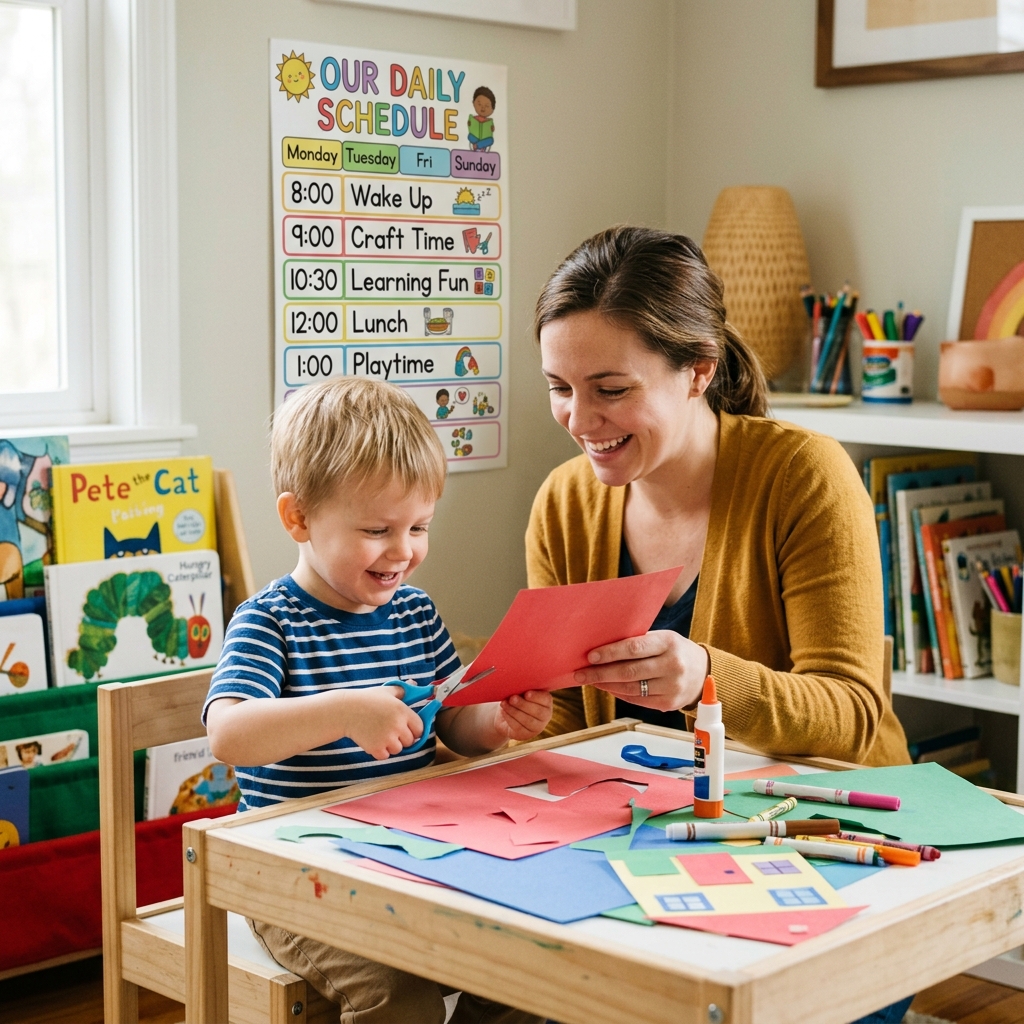
Children draw strength from routine and predictability. Create a flexible but consistent daily program. Instead of a rigid timetable, establish an activity sequence.
- Morning routine (8:00-9:00): Breakfast, getting dressed, daily conversation.
- Structured learning (9:00-10:00): Planned educational activities.
- Free play (10:00-11:00): Activities chosen by the child.
- Outdoor activity (11:00-12:00): Park, garden, or nature walk.
- Lunch and rest (12:00-2:00): Nutrition and nap or quiet activity.
- Creative activities (2:00-3:00): Art, music, crafts.
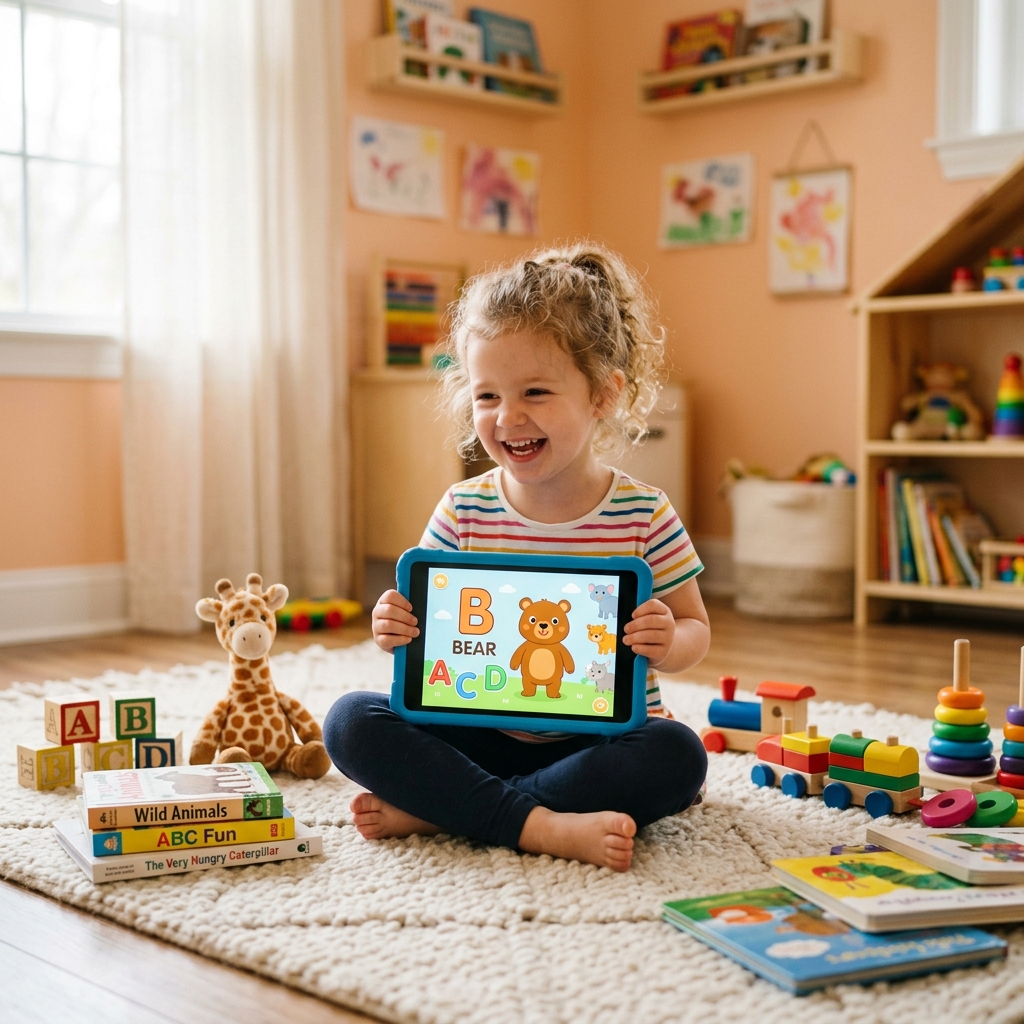
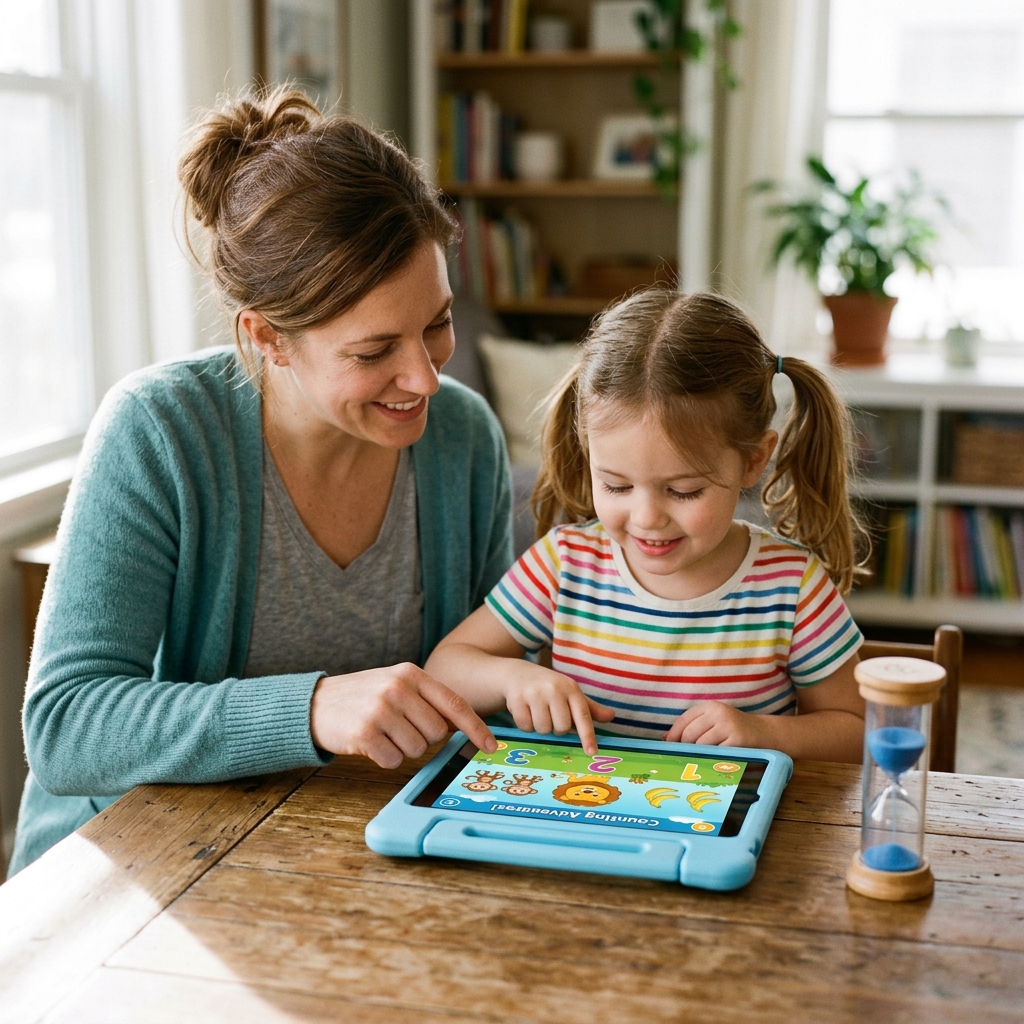
- Educational app time (3:00-3:30): Support with quality apps like Konus Benimle.
- Free play and family time (3:30-5:00): Transition to evening routine.
Step 2: Balance Development Areas
An effective program should cover all areas of development:
- Cognitive development: Counting, sequencing, matching, problem-solving activities.
- Language development: Reading books, storytelling, word games, language apps.
- Physical development: Fine motor (cutting, coloring) and gross motor (running, climbing) activities.
- Social-emotional development: Sharing, empathy, emotional expression exercises.
- Creativity: Art, music, drama, imagination games.
Step 3: Set Weekly Themes
Organizing activities around a different theme each week deepens learning and keeps the child interested. Example themes:
- Animals week: Animal names, sounds, habitats, animal art projects.
- Colors and shapes week: Color mixing, shape hunts, geometric art.
- Seasons week: Nature observation, seasonal collages, weather tracking.
- Occupations week: Learning about different professions, role-playing games.
- Our body week: Body parts, healthy eating, movement activities.
Home Education Activities by Age
Educational activities should be planned according to each age group's needs:
Ages 2-3: Sensory and Motor Development
- Sensory bins: Sensory exploration with rice, pasta, sand.
- Coloring and finger painting: Color recognition and motor skill development.
- Simple puzzles: 4-6 piece puzzles build problem-solving skills.
- Songs and rhymes: Support language development and memory.
- Block play: Stacking, sorting, and building skills.
Ages 3-4: Cognitive and Language Development
- Letter recognition: Writing letters in sand, shaping letters with clay.
- Numbers and counting: Counting practice with objects, basic addition concepts.
- Story time: At least 20 minutes of reading daily.
- Classification: Grouping objects by color, size, and shape.
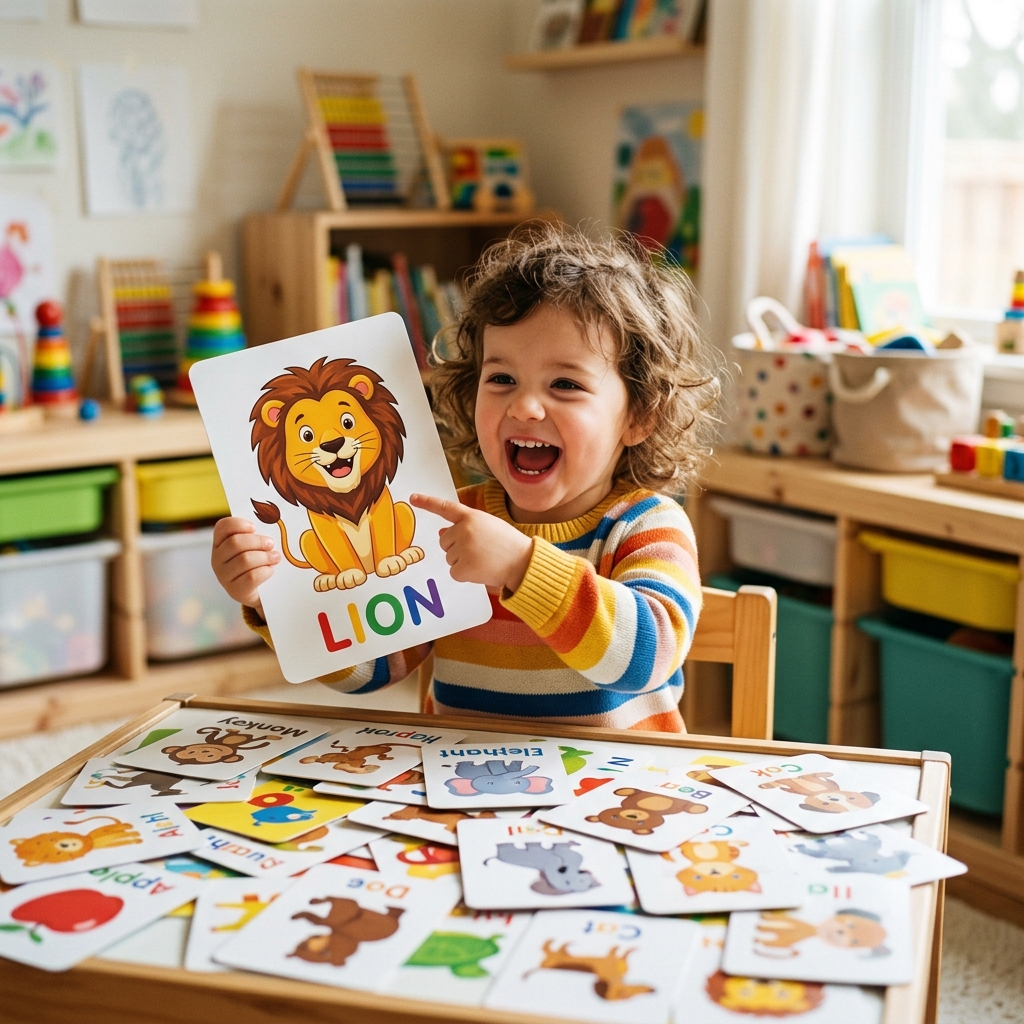
- Vocabulary building: Discovering 10-15 new flashcards daily with the Konus Benimle app.
Ages 4-5: School Readiness
- Pre-writing: Line work, maze solving, letter practice.
- Math foundations: Counting, comparing, simple patterns.
- Science experiments: Developing scientific curiosity through simple experiments.
- Social skills: Role-playing games, learning rules.
- Multilingual learning: Learning words and expressions in different languages. Turkish, English, and German vocabulary practice with Konus Benimle.
Strategies for Supporting Language Development at Home
Language development is one of the most important components of preschool education and can be most effectively supported in the home environment:
Reading Routine
At least 15-20 minutes of reading aloud daily expands the child's vocabulary, strengthens listening skills, and nurtures imagination. Encourage questions while reading and talk about the pictures.
Vocabulary Enrichment
Teach your child new words in daily life. Use fruit names at the store, nature terms at the park, ingredient names in the kitchen. The Konus Benimle app's 500+ flashcards make this process systematic.
Storytelling
Ask your child to tell their own stories. This activity supports both language and creativity development. The Konus Benimle app's AI-powered story creation feature can be an inspiration for this process.
Common Mistakes in Home Education
Common mistakes to avoid for effective home education:
- Over-structuring: Trying to plan every minute increases the child's stress. Free play time is also learning time.
- Comparison: Every child's pace of development is different. Avoid comparing with other children.
- Perfectionism: Process is more important than product. Appreciate the child's effort more than the quality of the outcome.
- Forcing: If the child shows no interest, change the activity or try again at a different time.
- Neglecting play time: Free play is a critical activity that supports the child's creativity, problem-solving skills, and social development.
Essential Materials List
List of basic materials for home education:
- Art supplies: Crayons, watercolors, glue, scissors, colored paper, clay.
- Learning materials: Puzzles, blocks, counting stones, magnetic letters.
- Books: Age-appropriate picture books, story books, information books.
- Nature materials: Magnifying glass, seeds, soil, plant pots.
- Digital tools: Tablet or phone (limited time), educational apps like Konus Benimle.
Conclusion: The Best School Is Your Home
Creating a preschool education program at home doesn't require being a teacher. Supporting your child's natural curiosity, providing a safe exploration environment, and spending quality time with them is enough. Consistency, flexibility, and fun are the three main pillars of this process. By strengthening language development with technology support through the Konus Benimle app, you can make a comprehensive contribution to your child's school readiness.