
Ages 2-3: The Golden Age of Language Development
The period between ages 2-3 is one of the most exciting and critical periods in children's language development. During this time, children transition from single words to sentences, their vocabulary expands rapidly, and their communication skills take a giant leap. Experts call this period the "golden age of language development."
According to research, the average vocabulary of a child entering age 2 is 50-100 words. By age 3, this number can reach 200-1,000 words — a tremendous increase. However, every child's development pace is different, and this wide range is perfectly normal.
Month-by-Month Language Development Chart: 24-36 Months
24 Months (Age 2): Peak of the Vocabulary Explosion
Children entering age 2 typically have these skills:
- Active vocabulary of 50-200 words
- Simple two-word sentences: "Mommy water," "Daddy come," "Car go"
- Beginning to ask and answer "What's this?"
- Understanding simple instructions: "Bring your shoes," "Throw the ball"
- Ability to say their own name
- Using the concepts of yes and no
At this stage, approximately 50% of children's speech can be understood by strangers.
27 Months: Sentences Get Longer
Around two and a half years, children:
- Begin forming three-word sentences: "I want water"
- Use simple adjectives: "Big car," "Red ball"
- Begin understanding plurals
- Use simple pronouns: "I," "you," "he/she"
- Start understanding past tense: "fell down," "went away"
30 Months: The Question Age
This period is known for children's famous "What?", "Why?", and "Where?" questions:
- Frequently asks "What's this?" and "Where is it?"
- Can form four-to-five-word sentences
- Understands simple stories and can tell short ones
- Begins naming colors
- Starts understanding number concepts: "one," "two," "many"
33 Months: Complex Expressions
As children approach age 3, language skills mature rapidly:
- Begins using conjunctions like "and," "but," "because"
- Approximately 75% of speech is understood by strangers
- Memorizes simple poems and songs
- Can express emotions verbally: "I'm sad," "I'm scared"
- Can narrate past events: "We played at the park"
36 Months (Age 3): Communication Master
Children reaching age 3 are already quite competent communicators:
- Rich vocabulary of 200-1,000 words
- Complex sentences of five-to-six words
- Ability to tell simple stories
- Can ask "Who?", "When?", and "How?" questions
- 75-90% of speech is understood by strangers
- Ability to participate in conversation and wait for turns
Most Common First Words at Age 2
Research shows common patterns in children's first words across different languages. The most common first words include:
People and Relationship Words
Mommy, Daddy, Grandpa, Grandma, baby — Children primarily learn the names of the closest people in their lives. These words express emotional bonds and a sense of security.
Basic Need Words
Water, food, milk, eat, sleep — Words used to meet their needs are among the earliest learned. These words increase the child's motivation to communicate.
Everyday Object Words
Ball, car, shoe, sock, cup, spoon — The names of objects the child interacts with daily are learned quickly.
Animal Words
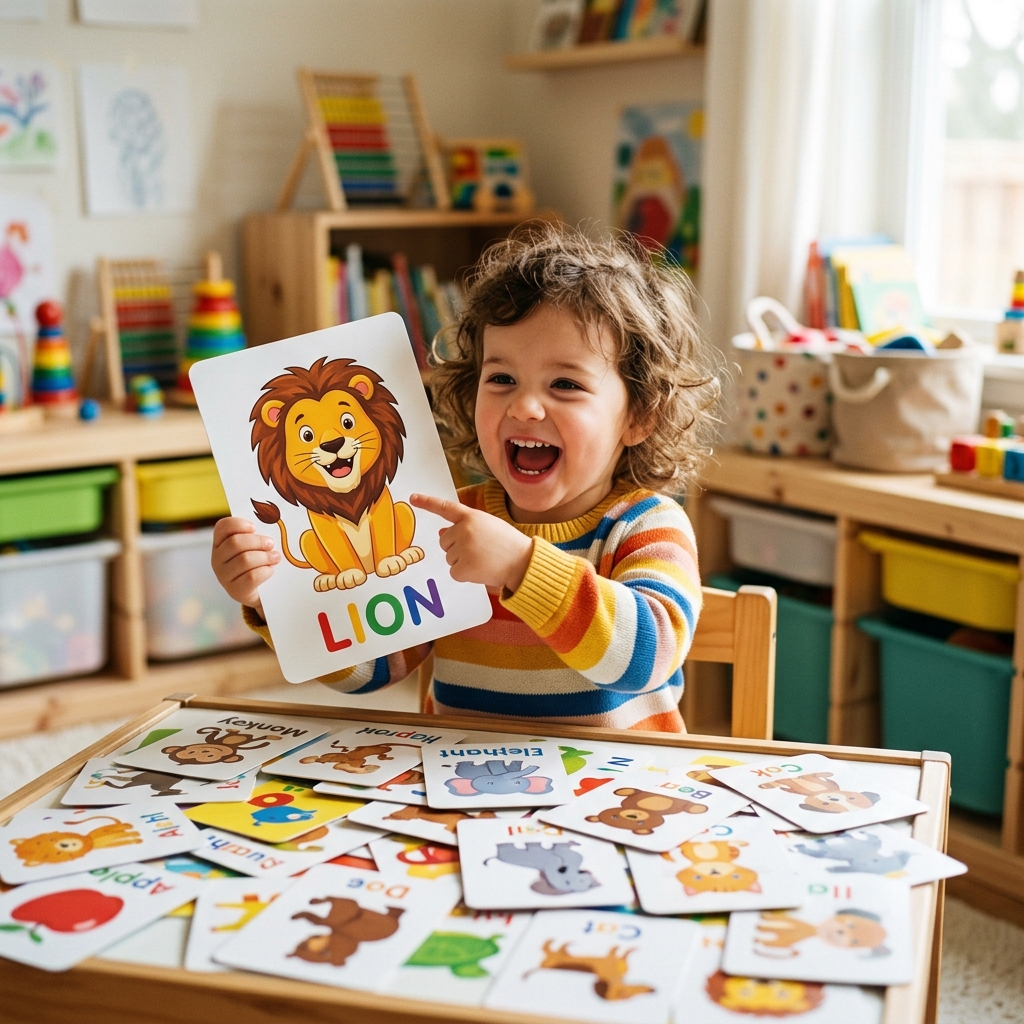
Cat, dog, bird, fish — Animals are a universal topic that captures children's interest. Both real animals and images in books support vocabulary learning.
Action Words
Come, go, give, take, eat, drink, look — Verbs are usually learned slightly after nouns but are critical for sentence formation.
Social Words
Yes, no, please, bye-bye, hello — Social interaction words develop the child's social communication skills.
Vocabulary Explosion: When and Why Does It Happen?
The vocabulary explosion is the period when children's word banks expand suddenly and rapidly. It typically begins between 18-24 months and peaks around age 2. During this period, children can learn 5-10 new words per week.
The reason for the vocabulary explosion is the child's grasp of the "naming insight": they discover that every object has a name, and this discovery triggers the desire to learn new words. During this process, children constantly ask "What's this?" — hearing this question is a good sign for parents.
8 Ways to Support First Words
1. Name and Repeat
Name every object you see in daily life and repeat it in natural context. "Look, a cat! The cat is sleeping. The cat is so cute." This repetition shows the word's usage in different contexts and increases retention.
2. Ask Choice Questions
Instead of "What do you want?" ask choice questions like "Do you want an apple or a banana?" This method provides word models for the child and makes responding easier.
3. Turn Daily Routines into Language Opportunities
Daily routines like meals, bath time, getting dressed, and park visits are excellent language learning opportunities. "Now we're putting on your shoes. First the left foot, then the right foot." This way, every routine becomes a language lesson.
4. Do Interactive Reading with Picture Books
Don't just read picture books — make them interactive. Ask questions like "Where's the dog?", "How many apples are there?", and "What is the child doing?" to ensure active participation. Research shows that interactive reading supports language development 2 times more than passive reading.
5. Follow Your Child's Interests
Talk about whatever interests your child. If they're fascinated by cars, focus on car vocabulary; if they love animals, work with animal words. Interest-based learning increases motivation.
6. Use Technology Wisely
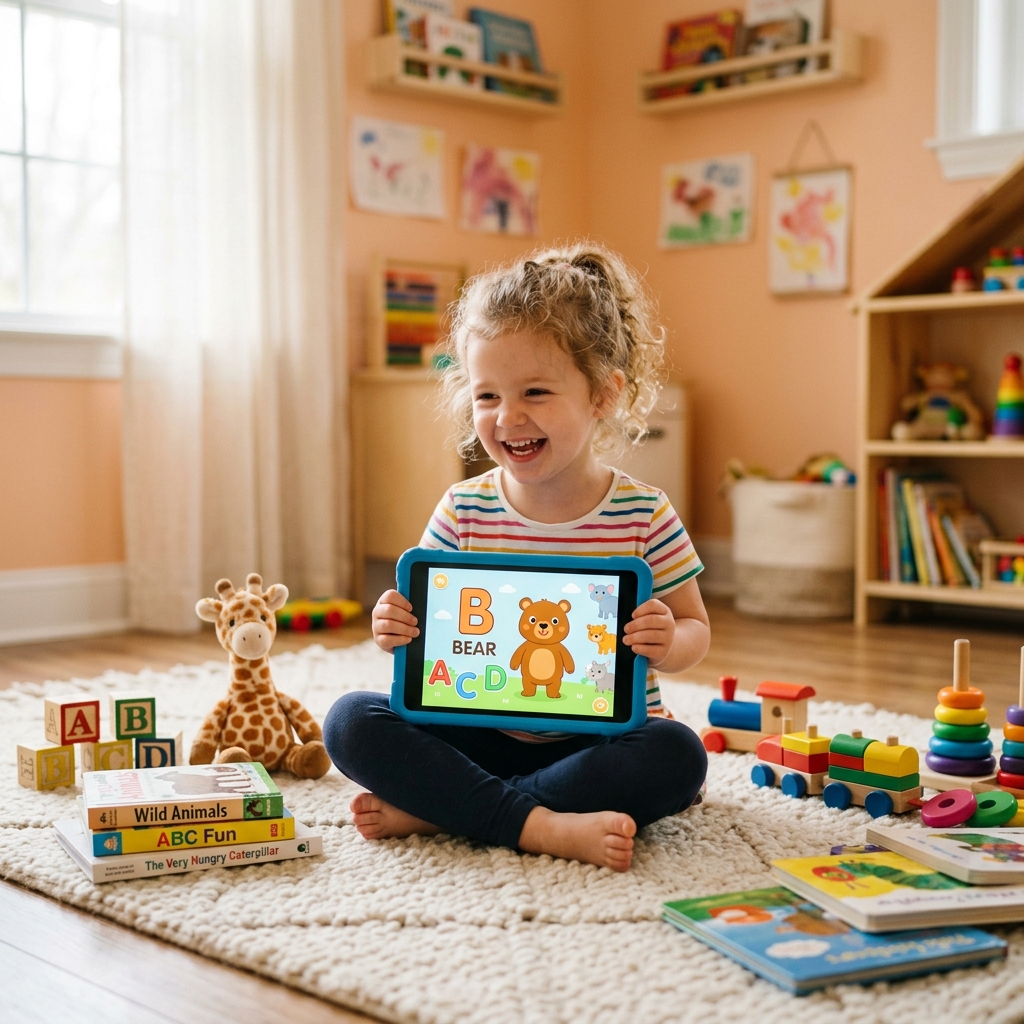
Pedagogically-based apps like Konus Benimle offer specially designed vocabulary teaching programs for 2-3 year olds. Visual flashcard word matching, level-based progression, and AI-powered stories are the modern way to strengthen your child's first words. The app's trilingual structure (Turkish, English, German) is an ideal tool for families wanting to start multilingual learning early.
7. Reinforce with Songs and Rhymes
Music is a powerful tool for children to learn and remember new words. Traditional children's songs are both entertaining and educational, combining rhythm, repetition, and vocabulary in an engaging format.
8. Be Patient and Avoid Comparisons
Every child is unique and follows their own developmental timeline. A neighbor's child might be forming sentences at age 2, while yours might still be using single words — and both situations can be within normal limits. What matters is whether there is forward progress.
First Words in Bilingual Children
Language development in children learning multiple languages may show some differences:
- Total vocabulary: When words from both languages are combined, bilingual children's vocabulary is similar to or broader than monolingual peers
- Code-switching: Switching between two languages is normal and indicates cognitive flexibility
- Temporary delay: Looking at a single language may show temporary delay, but this usually balances out around ages 3-4
- Language preference: The child may prefer some words in one language and others in another — this is completely normal
The Konus Benimle app enables children to learn Turkish, English, and German words simultaneously. Progress in each language is tracked separately, and content appropriate to the child's level is provided.
Warning Signs That Require Attention
Between ages 2-3, the following situations may require professional evaluation:
- Using fewer than 25 words by 24 months
- Unable to form two-word phrases by 30 months
- Difficulty understanding simple instructions
- Loss of previously spoken words
- Reluctance to make eye contact
- Not engaging with peers
- Not using gestures (waving, pointing)
If you observe one or more of these signs, consulting a speech-language pathologist is recommended. Early intervention is always the most effective intervention.
Conclusion: First Words, Great Beginnings
The period between ages 2-3 is a magical time when your child begins discovering the world through words. Every new word opens a new door in their brain; every sentence moves them one step forward in their journey of understanding the world. Supporting this period with a rich language environment, plenty of play, interactive reading, and the right technology tools is the most valuable investment you can make in your child's future.
Konus Benimle is a powerful tool that presents scientific methods in an engaging format to support 2-3 year olds' language development. With visual cards, AI stories, and a gamified learning system, we aim to accompany every child on their journey from first words to sentence building.
Every word is a beginning — and the most beautiful stories start with first words.