The First Year: Building the Foundations of Language
Your baby's first year is a critical period when the foundations of language development are laid. Even though they can't say words yet, babies begin understanding language and communicating from the moment they're born. Research shows that babies can hear sounds during the last 3 months in the womb and can distinguish their mother's voice from others after birth.
In this guide, we'll examine language development stages month by month from 0-12 months and learn how you can support your baby during each period.
0-3 Months: Listening and First Sounds
What Can Your Baby Do?
- Turns head toward sounds
- Recognizes mother's voice and calms down
- Expresses needs through different types of crying (hunger, discomfort, sleep)
- Produces vowel sounds like "aaa," "ooo"
- Responds to facial expressions, especially smiling
How Can You Support Them?
The most important thing during this period is talking to your baby. Even though they don't understand yet, the tone, rhythm, and melody of your voice create language connections in the baby's brain. Narrate what you're doing during diaper changes, feeding, and bath time. Even simple sentences like "Now we're changing the diaper, let's lift your legs" are very valuable.
Imitate the sounds your baby makes — this is their first "conversation" experience and teaches them that communication is reciprocal.
3-6 Months: The Babbling Period
What Can Your Baby Do?
- Begins babbling: Consonant-vowel combinations like "ba-ba," "ma-ma," "da-da"
- Looks toward the source of sounds
- Can distinguish different tones of voice (happy, angry, sad)
- Begins responding to their own name
- Shows interest in music and rhythmic sounds
- Produces social sounds like laughing and squealing
How Can You Support Them?
Babbling is a major milestone in language development. When your baby says "ba-ba-ba," respond with "Ba-ba! Yes, daddy!" This reciprocal conversation practice accelerates the baby's communication skills.
Sing simple songs and play finger games. Peekaboo is a perfect activity for this period — it's both fun and teaches object permanence.
6-9 Months: Meaningful Sounds and Gesture Use
What Can Your Baby Do?
- Babbling becomes more complex: tries different sound combinations
- Begins to understand "no"
- Grasps simple instructions: "Come here"
- Starts pointing — a strong indicator of language development
- Imitates gestures like waving (bye-bye) and clapping
- Responds to names of familiar objects
How Can You Support Them?
This period is a critical time when the connection between gestures and language is established. When your baby points at an object, say its name: "Yes, ball! Red ball." This creates a connection between pointing and words.
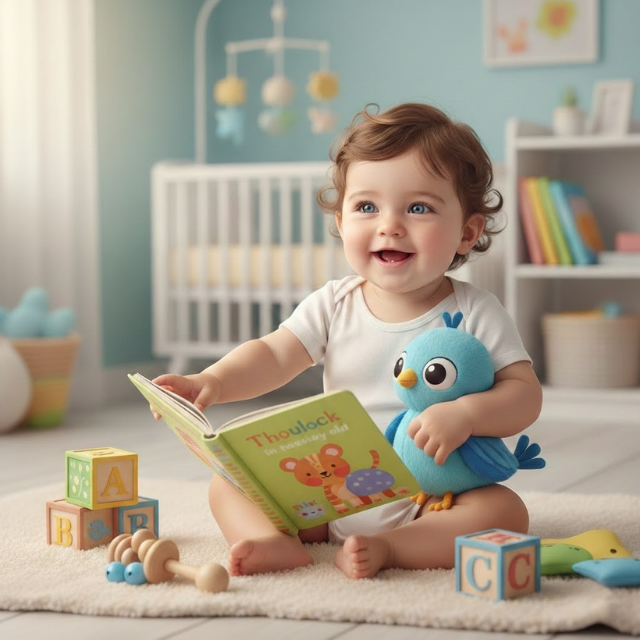
Explore simple books together. Point to large, colorful pictures and make short explanations like "Look, a cat! The cat says meow." Touch-and-feel books are ideal for this age.
9-12 Months: First Words Are Coming
What Can Your Baby Do?
- Says first meaningful words: Usually "mama," "dada," "milk"
- Understands 10-50 words (even if they can't say them)
- Follows simple requests like "Give me that"
- Imitates the melody and rhythm of speech (babbles as if forming sentences)
- Tries to attract attention by pointing at objects
- Understands simple questions: "Where's the food?"
How Can You Support Them?
When you hear your baby's first words, give exaggerated and positive reactions. "You said mama! Bravo!" This positive reinforcement increases the child's motivation to try more words.
Use the same words consistently in daily routines. Saying "Mealtime!" before every meal and "We're putting on shoes!" every time you go out helps words stick.
7 Golden Rules for Supporting Language Development in the First Year
1. Talk Constantly
Talk to your baby during every daily activity. Research shows that the number of words heard in the first year directly affects future language skills. Narrate everything you do out loud.
2. Establish Reciprocal Communication
When the baby makes sounds, respond, pause, and wait for them to make sounds again. This "conversation turn-taking" habit forms the basis of speech.
3. Read Books
You can start reading books as early as 3 months. At this age, the melody of your voice and the time spent together matter more than the book's content.
4. Sing Songs
Lullabies and children's songs are among the strongest supporters of language development. The rhythm of music makes it easier to grasp the natural flow of speech.
5. Keep Away from Screens
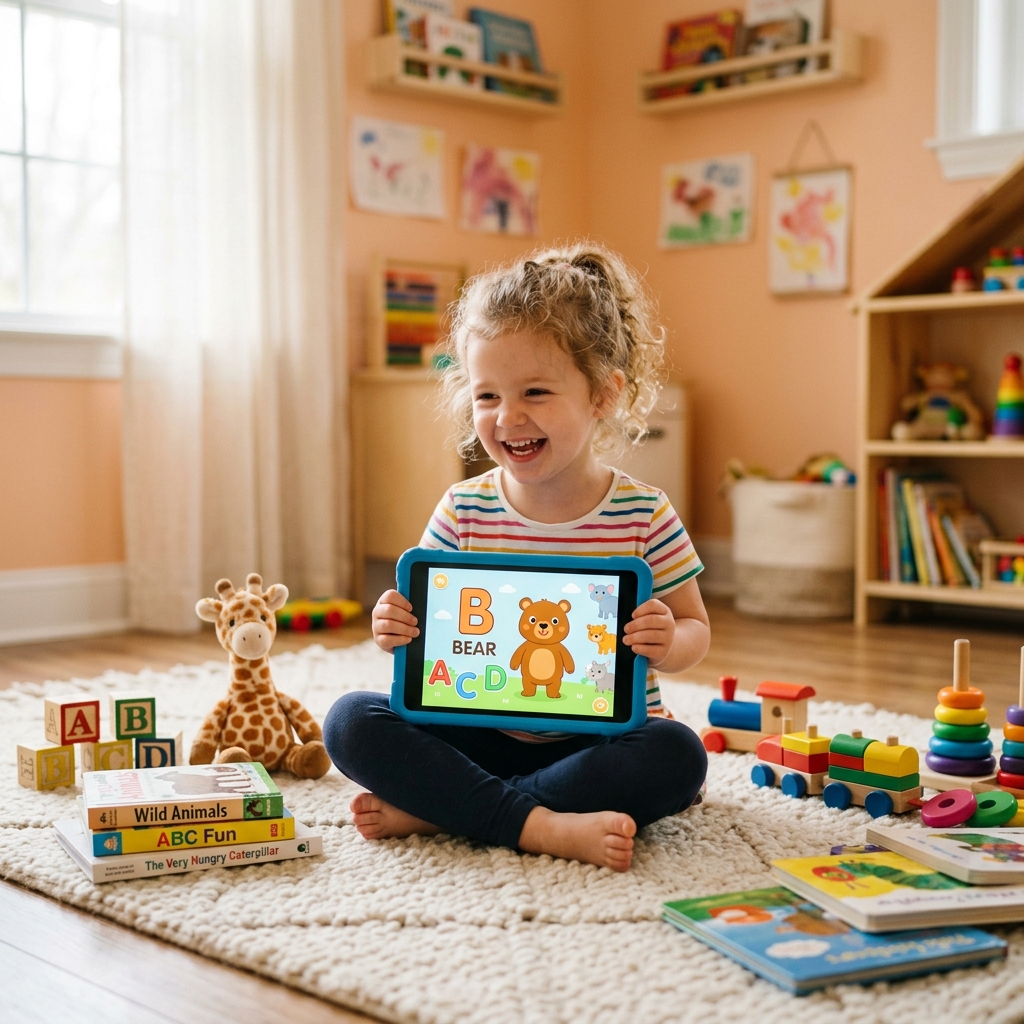
The World Health Organization recommends zero screen time for babies under 1 year. Real human interaction is far more effective for language development than screens.
6. Provide Different Sounds and Textures
Rattles, musical toys, books with different textures — these enrich the baby's sensory experience and indirectly support language development.
7. Use Technology at the Right Time
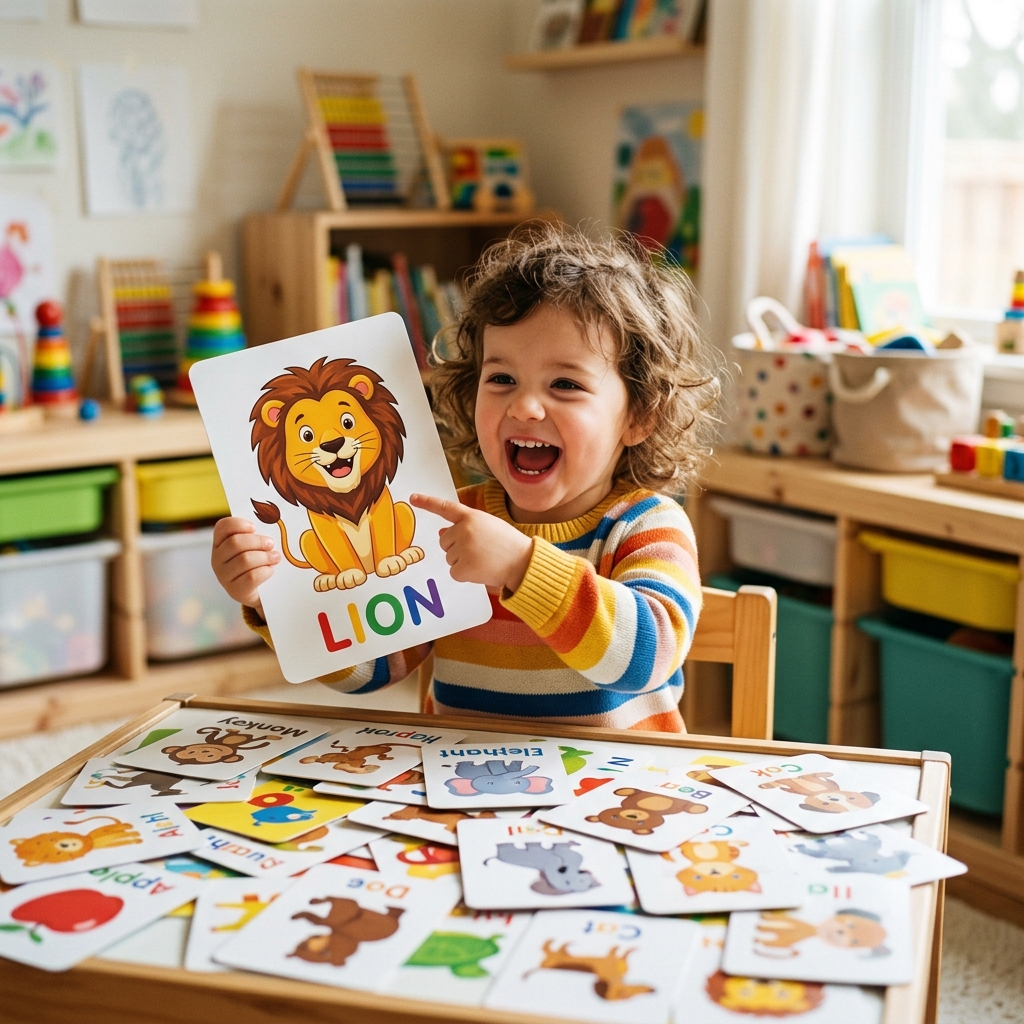
After age 1, pedagogically-based apps like Konus Benimle can be used to support language development. Visual vocabulary cards and level-based content are the modern way to strengthen your child's first words.
When Should We Worry?
Every baby develops at their own pace, but the following situations may warrant consulting a specialist:
- Not making any sounds or babbling by 6 months
- Not responding to sounds by 9 months
- Not using any gestures (waving, pointing) by 12 months
- Not attempting any words by 12 months
- Not making eye contact
Early detection and early intervention are the most critical factors in language development. If you have concerns, consult a child development specialist without delay.
Conclusion: Every Sound Is a Beginning
Your baby's first year is a period when the quiet but powerful foundations of language development are laid. From the first smile to the first babble, from the first gesture to the first word — each stage is a building block for the next. Talking to your baby, singing, and spending time together is the most valuable gift you can give.
Konus Benimle is a powerful tool designed to support language development after age 1. As your baby grows, you can add a fun dimension to their language journey with visual cards and AI stories.
Every step you take in the first year forms the foundation of your child's language world.