When Should Alphabet Teaching Begin?
One of the most frequently asked questions by parents: "At what age should I teach my child letters?" Experts recommend formal alphabet teaching beginning around ages 4-5, while familiarity with letters can start much earlier. The key is creating a natural discovery process through play without pressure.
At ages 2-3, children notice that letters exist; at 3-4, they begin recognizing some letters; and at 4-5, they can learn most letters. However, every child's readiness level is different — follow their interest, don't force it.
Core Principles of Alphabet Teaching
Sound-First Approach
Teach letter sounds before letter names. Instead of "This letter is called B," say "This letter makes the 'bbb' sound." Because during reading, children blend letter sounds: b-a-ll = ball. This method makes the transition to reading much easier.
Concrete to Abstract
Young children struggle with abstract concepts. Associate letters with concrete objects: "A" for "Apple," "B" for "Ball." Using visual and tactile materials transforms abstract letters into concrete experiences.
Multi-Sensory Learning
Children learn best using multiple senses. Seeing the letter (visual), hearing its sound (auditory), tracing it with fingers (tactile), and forming its shape with the body (kinesthetic) — using all these channels strengthens learning.
10 Fun Alphabet Activities
1. Playdough Letters
Shaping letters with playdough develops both fine motor skills and letter recognition. Form each letter together with your child and say its sound. Using colorful dough makes the activity more engaging.
2. Sand or Salt Tray
Place a thin layer of sand or salt on a flat tray. Let your child trace letters with their finger. This tactile experience embeds letter shapes into muscle memory. When they make mistakes, shake the tray and start over — this normalizes errors.
3. Letter Hunt
Go on a "letter hunt" inside the house or outdoors. Say "Today we're looking for the letter B!" and examine signs, books, and packaging. This activity helps children notice written language in their environment and provides real-world context learning.
4. Body Letters
Make letter shapes with your body together with your child. Spread your arms for "T," lie down for "I." This kinesthetic activity is especially effective for active children and strengthens learning through large muscle groups.
5. Alphabet Songs
Go beyond the classic alphabet song. Create short melodies or rhymes for each letter. Music is one of the most effective memory-strengthening tools, and letters learned through songs are much more lasting.
6. Magnetic Letters
Playing with letters that stick to the fridge or magnetic board is both fun and educational. Ask your child to find specific letters, form simple words, or group letters by color. This free play format provides pressure-free learning.
7. Finger Paint Letter Writing
Writing letters with finger paint on large paper combines artistic expression with learning. Using different colors for each letter makes visual distinction easier. This activity is especially ideal for the 3-4 age group.
8. Letter Matching Game
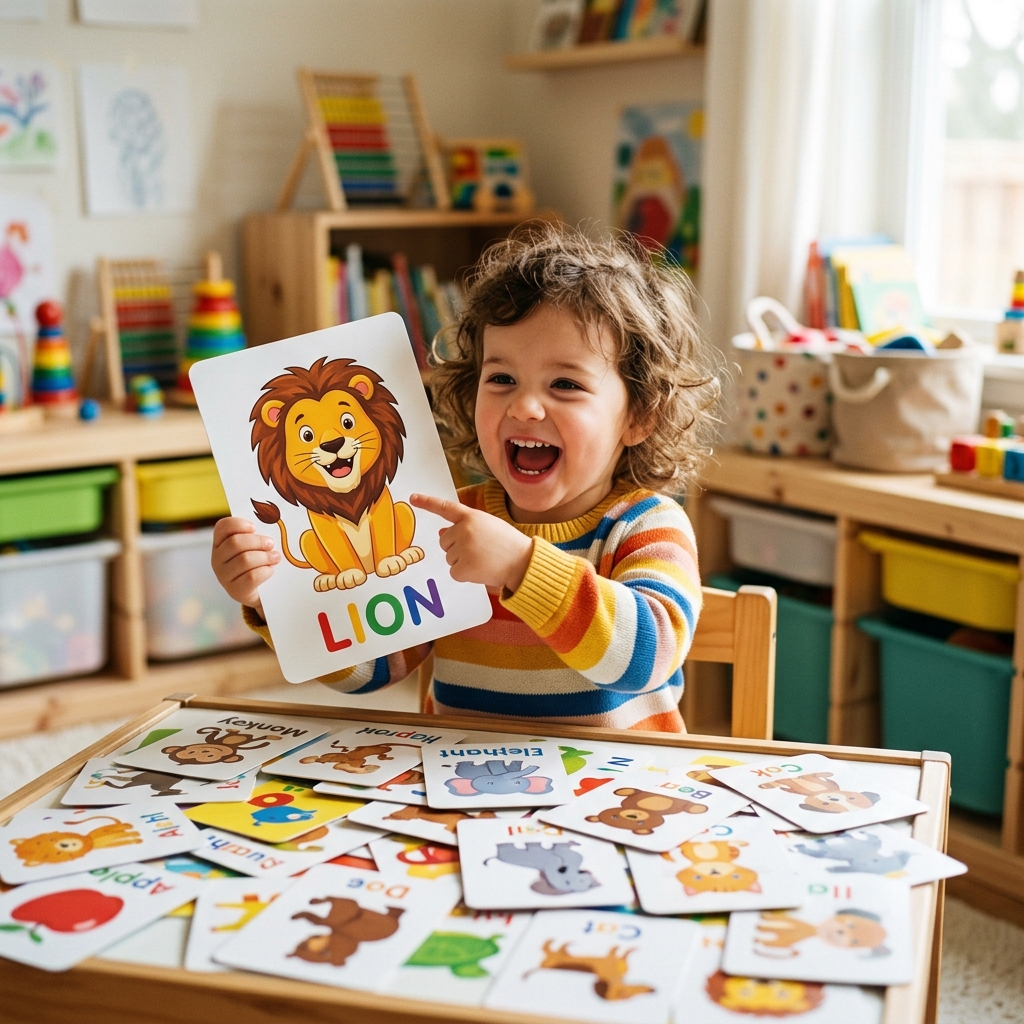
Prepare matching cards for uppercase and lowercase letters. Let your child flip cards to find pairs — this develops both memory and letter recognition skills. Over time, enrich the game by adding pictures of objects starting with each letter's sound.
9. Digital Tool Support
Educational apps like Konus Benimle support letter and word learning with visual cards and gamification. The app presents level-appropriate words, helping children recognize letters in meaningful contexts. 15-20 minutes of daily app use complements traditional activities.
10. Letter Discovery in Nature
At the park, compare branches to the letter "Y" and stones to the letter "O." Associating shapes in nature with letters enriches the child's environmental perception and makes the alphabet part of daily life.
Age-Based Alphabet Teaching Approach
Ages 2-3: Awareness Stage
No formal teaching at this age. The goal is for the child to become aware that letters exist. Illustrated alphabet books, alphabet puzzles, and songs are sufficient.
Ages 3-4: Recognition Stage
The child begins recognizing the first letter of their name and frequently seen letters. Expand this recognition with play-based activities but don't create performance expectations.
Ages 4-5: Learning Stage
Most children are ready to learn most letters during this period. Begin establishing letter-sound relationships and move to simple word-building activities.
Ages 5-6: Application Stage
Reading and writing simple words by combining letters begins. Patience is crucial at this stage — every child's reading readiness timeline is different.
Mistakes to Avoid
- Pressuring: Statements like "You still don't know the letter A?" break learning motivation
- Comparing: "The neighbor's child is already reading" creates anxiety
- Starting too early: Forcing when the child isn't ready can create negative attitudes
- Teaching only through writing: Pen-and-paper work alone without multi-sensory experiences is insufficient
- Highlighting mistakes: Saying "Great try!" is much more effective than "You got it wrong"
Conclusion: Let the Alphabet Be an Adventure
Alphabet teaching should be a discovery adventure, not a lesson. Follow your child's interests, prefer learning through play, and most importantly, make the process enjoyable. Letters learned in a pressure-free, fun, and multi-sensory environment are much more lasting.
Konus Benimle helps children discover both letters and words in a fun way with visual cards and a gamified system. While learning Turkish, English, and German words, your child naturally becomes familiar with different alphabets.
Every letter is a door to a new world — and the best way to open these doors is through play.