What Is Emotional Intelligence and Why Does It Matter?
Emotional intelligence (EQ) is the ability to recognize, understand, and manage your own emotions while accurately reading the emotions of others. Unlike academic intelligence (IQ), emotional intelligence plays a defining role in every area of life, from building relationships and solving problems to coping with stress. Research consistently shows that children with higher emotional intelligence achieve better outcomes across academics, social relationships, mental health, and even career performance later in life.
Emotional intelligence is not a fixed trait you are born with; it can be developed from early childhood onward. The period from birth to age six, when brain development is most rapid, represents a critical window for laying the foundations of emotional skills. Conscious, intentional support from parents during this period permanently shapes a child's emotional intelligence.
The Core Components of Emotional Intelligence
Emotional intelligence development in children comprises five fundamental components:
- Self-awareness: The ability to recognize and name one's own emotions
- Self-regulation: The skill of controlling emotions and managing impulses
- Motivation: Setting goals and showing perseverance in the face of setbacks
- Empathy: The capacity to understand and share the feelings of others
- Social skills: Communicating effectively, cooperating, and resolving conflicts
These components are deeply interconnected. A child who cannot identify their own emotions will also struggle to understand the emotions of others. That is why emotional intelligence development is a progressive journey that begins with self-awareness and extends toward social competence.
Signs of High and Low Emotional Intelligence in Children
Signs of High Emotional Intelligence
- Can express feelings in words: "I am angry because he took my toy"
- Tries to comfort friends when they are upset
- Finds ways to calm down when facing frustration
- Can share and wait for their turn
- Understands different points of view
- Can acknowledge and accept their own mistakes
Signs of Low Emotional Intelligence
- Reacting to every negative situation with crying or anger outbursts
- Significant difficulty expressing emotions verbally
- Struggling with empathy, frequently hurting peers
- Extreme difficulty adapting to changes
- Complete inability to tolerate losing or failure
- Tendency toward isolation or frequent conflicts in social settings
These signs do not always indicate a permanent problem. Most can be improved quickly with proper guidance and support.
Age-Appropriate Strategies for Developing Emotional Intelligence
Ages 0-2: The Secure Attachment Period
During this stage, the foundation of emotional intelligence is built through secure attachment. Responding consistently and lovingly to your baby's needs creates the bedrock of emotional security.
- Respond promptly and consistently to your baby's cries
- Strengthen the emotional bond through eye contact and a gentle voice
- Narrate your baby's emotions aloud: "You are hungry, I understand. I am preparing your food now"
- Reinforce the sense of safety through physical touch and cuddling
Ages 2-4: The Emotion Naming Period
Children in this age group experience intense emotions but lack the tools to express them. Building an emotion vocabulary alongside language development is critically important.
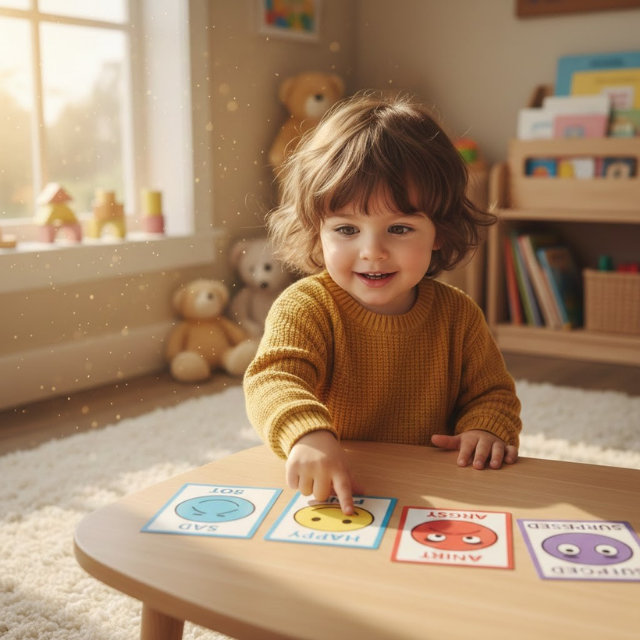
- Teach the names of basic emotions: happy, sad, angry, scared, surprised
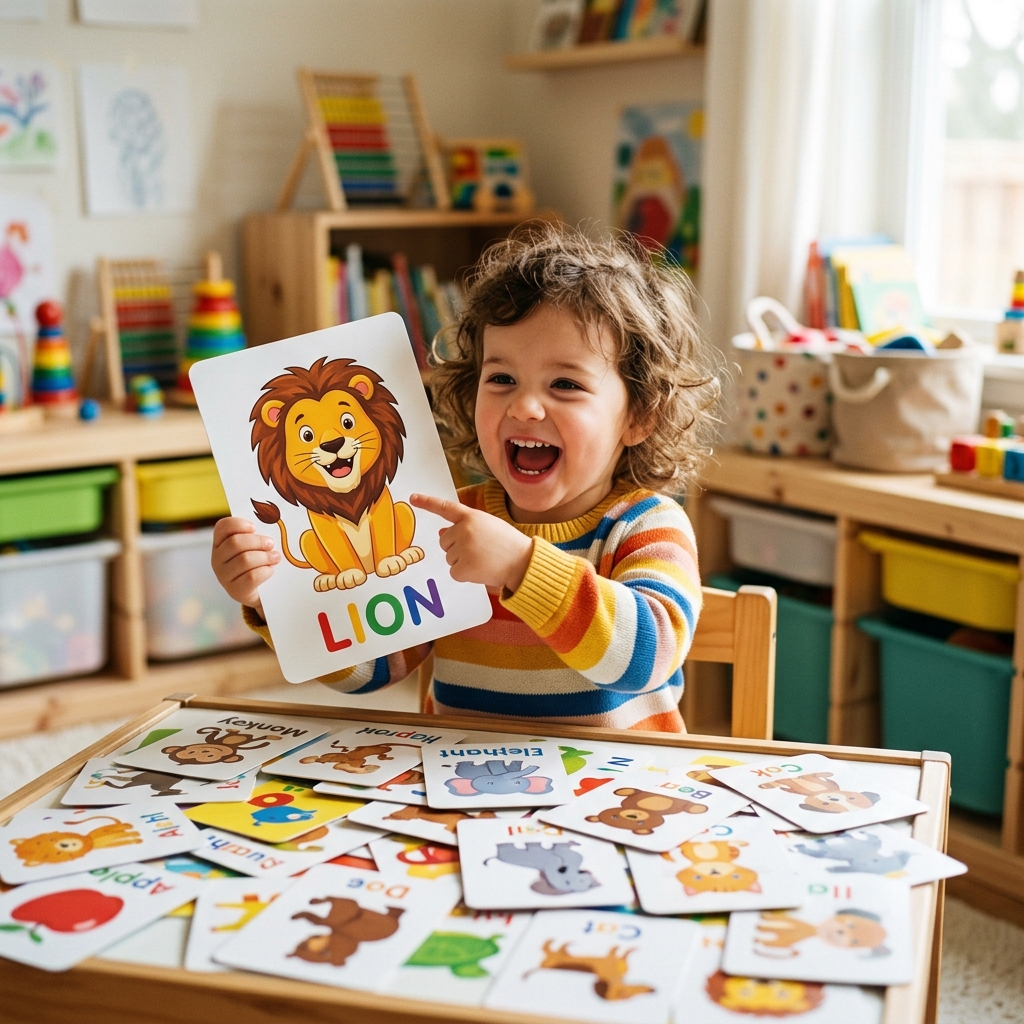
- Use emotion cards and facial expression visuals
- Discuss the feelings of characters in storybooks together
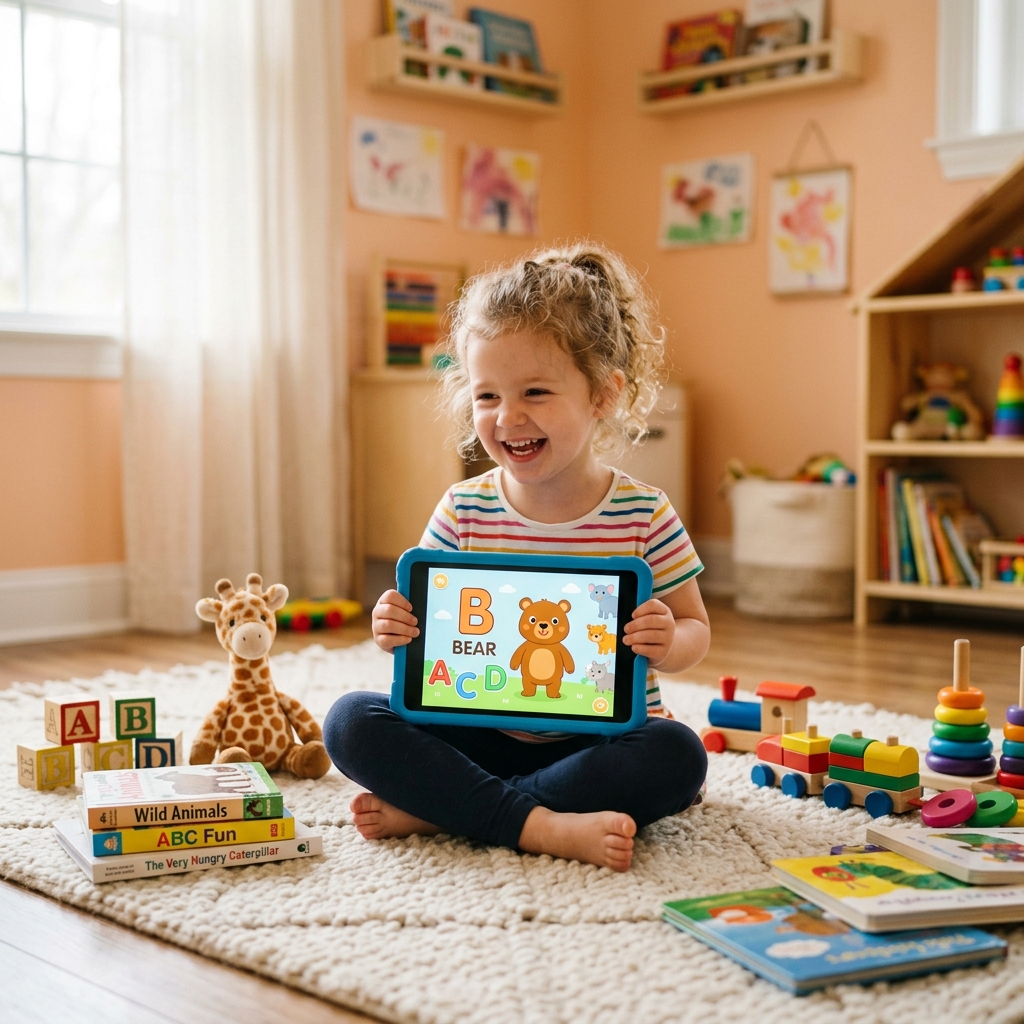
- Visual flashcards in educational apps like Konus Benimle help children make abstract emotions tangible, expanding their vocabulary while also learning emotion words in multiple languages
- Make "How are you feeling right now?" a regular part of daily routines
Ages 4-6: The Empathy and Self-Management Period
During preschool years, children begin to understand perspectives other than their own. This is the golden period for empathy development.
- Use role-playing games to let children experience different perspectives
- Teach calming strategies: deep breathing, the 5-4-3-2-1 technique
- Solve problems together instead of providing direct solutions
- Start an emotion journal — your child can draw while you write
- Develop cooperation and sharing skills through team activities
Empathy: The Heart of Emotional Intelligence
Empathy is the most powerful component of emotional intelligence and serves as the building block of all social relationships. Empathetic children form healthier friendships, resolve conflicts more easily, and develop a stronger sense of social responsibility.
Practical ways parents can nurture empathy:
- Model it: Recognize and verbalize the feelings of others in front of your child. "Grandma is feeling unwell. Should we make her a card?"
- Practice emotion coaching: Accept and validate your child's feelings rather than suppressing them. "I can see you are sad that your friend left. That is a completely normal feeling"
- Encourage perspective-taking: Ask questions like "How do you think Alex felt? What would you feel if you were in his shoes?" to promote viewpoint shifting
- Use books and stories: Discussing characters' emotions allows empathy to be practiced in a safe environment
The Connection Between Emotional Intelligence and Language Development
Emotional intelligence and language development are two areas that directly nourish each other. The richer a child's vocabulary, the more accurately and precisely they can express their emotions. A child who can say "I feel disappointed" instead of "I feel bad" both understands their own emotion better and receives more appropriate support from those around them.
This powerful connection between language development and emotional intelligence turns vocabulary learning into a vehicle for emotional growth. The rich visual flashcards and AI-powered story creation system offered by Konus Benimle both expand vocabulary and expose children to emotional expression patterns across different contexts. Learning emotion words in three languages (Turkish, English, German) deepens a child's emotional awareness in meaningful ways.
Research shows that children experiencing delays in language development are also more likely to face difficulties with emotional expression and behavioral regulation. Therefore, supporting language development simultaneously strengthens emotional intelligence.
7 Practical Activities You Can Integrate Into Daily Life
1. The Emotion Thermometer
Draw a scale from 1 to 10 on paper and ask your child to show where their current emotion falls. This method makes emotional self-awareness concrete and measurable.
2. The Gratitude Jar
Each day, write down one positive emotion or experience on a slip of paper and place it in a colorful jar. Read them together at the end of the week. This activity builds the habit of noticing positive feelings.
3. The Calm-Down Corner
Create a cozy corner at home with soft cushions and calming objects. Encourage your child to visit this space when they feel overwhelmed — this is not a punishment but a self-regulation tool.
4. Story Completion
Present open-ended scenarios: "A child was playing at the park and someone took their toy. How did that child feel? What did they do next?" This develops empathy and problem-solving simultaneously.
5. The Mirror Game
Sit facing your child and act out different emotion expressions. Ask them to mirror you, then switch roles. This game strengthens facial expression reading skills.
6. Breathing Exercises
Teach techniques like balloon breathing, bumble bee breathing, or square breathing in a playful manner. Incorporate them into daily routines. Breathing exercises done together before bedtime reinforce emotional regulation skills.
7. The Gratitude Ritual
Every evening before bed, share one thing you are each grateful for. This simple ritual strengthens the ability to recognize and articulate positive emotions.
Common Mistakes Parents Should Avoid
- Suppressing emotions: Instead of saying "Stop crying, nothing happened," say "I can see you are upset"
- Making comparisons: Phrases like "Look, your brother is not crying" damage emotional trust
- Judging emotions: Replace "There is no reason to be so angry" with "It is normal to feel angry. Let us calm down together"
- Fixing everything immediately: Give your child the space to develop their own solutions
- Inconsistent responses: Reacting calmly one time and angrily the next to the same situation undermines emotional security
Conclusion: Emotional Intelligence Is a Lifelong Gift
Emotional intelligence is one of the most valuable gifts you can give your child. Academic success may be temporary, but an individual who can recognize their emotions, manage them, and empathize with others is resilient in every area of life. The foundations you lay during early childhood will empower your child to build healthy relationships, cope with stress, and grow into a fulfilled individual.
Konus Benimle is a comprehensive educational tool that enriches emotional expression skills while supporting language development. Through visual flashcards, AI-generated stories, and interactive features, even a few minutes each day contributes to both emotional and linguistic growth.
Remember: Emotional intelligence is not a luxury — it is a fundamental life skill. And the most powerful teacher is always a parent.