Why Is Vocabulary So Important?
Research shows that vocabulary acquired in childhood is directly related to academic success, social skills, and cognitive development. Children with a high vocabulary by age 3 have been proven to be ahead of their peers throughout school.
According to Hart and Risley's famous study, by age 3, there can be a 30-million-word exposure gap between children. This gap directly affects a child's future language ability.
1. Talk to Your Child Constantly
The simplest yet most effective method: talk to your child. Describe what you see while eating, walking, or shopping. Even simple sentences like "Look, a yellow bus is passing by" expand vocabulary.
Tip:
Practice "parallel talk" — describe your child's actions: "You're picking up the red Lego, now you're adding the blue one."
2. Read Aloud
Reading for at least 15-20 minutes a day develops vocabulary at an incredible rate. Books contain words not used in everyday speech, exposing children to different vocabulary.
3. Use Educational Apps
Educational apps like Konus Benimle teach words simultaneously through visual, auditory, and written channels. This multisensory approach makes words more memorable. Plus, it offers vocabulary learning in 3 different languages.
4. Use Words in Context
When teaching a new word, use it in different sentences. For example, for the word "big": "A big ball", "A big tree", "You're a big kid."
5. Songs and Rhymes
Children's songs and rhymes make words fun through rhythm and melody. Repeating structures help words naturally become permanent in memory.
6. Vocabulary Integration in Daily Routines
Count ingredients while cooking, name clothing colors while dressing, identify animals at the park. Every moment is a learning opportunity.
7. Ask Open-Ended Questions
Instead of yes/no questions, ask "What did you do at the park?" Open-ended questions encourage children to think and form sentences.
8. Play Word Games
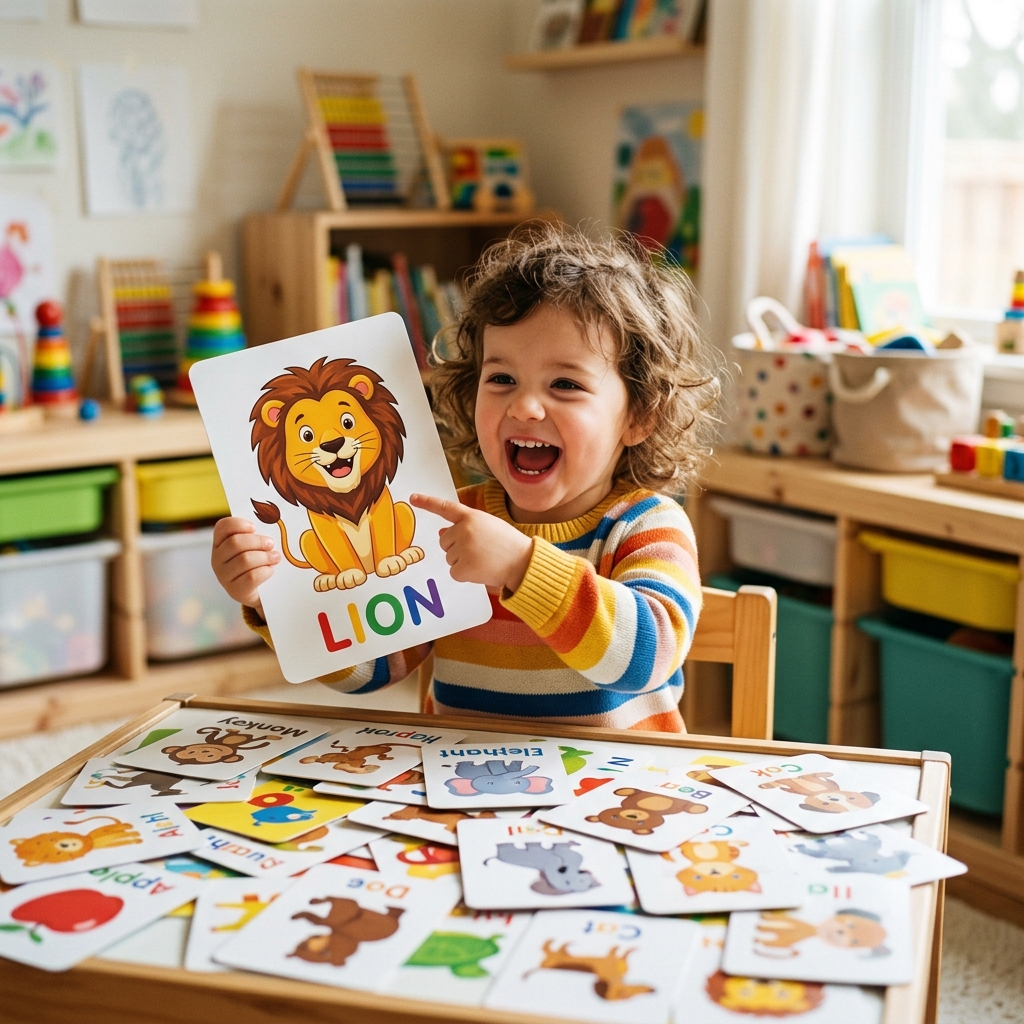
Games like "What color is this?", "Which animal makes this sound?" reinforce word knowledge. Flash cards and matching games are also very effective.
9. Multilingual Environment
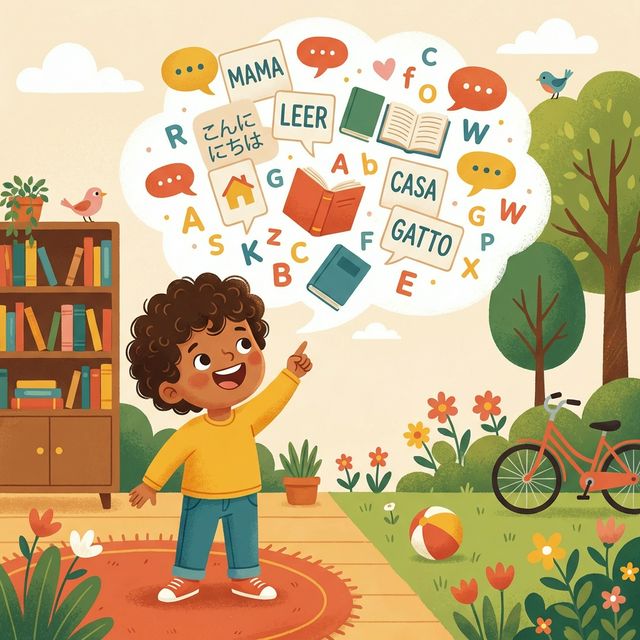
Children exposed to multiple languages have broader vocabularies than monolingual speakers. Learning words in each language strengthens the brain's language center.
10. Be Patient and Consistent
Vocabulary development is a marathon, not a sprint. Every child progresses at their own pace. What matters is consistently supporting your child's language development.
Conclusion
Building vocabulary doesn't require expensive materials or complex methods. Being mindful in your daily interactions, reading aloud, and using quality educational tools like Konus Benimle is enough. Every word is an investment in your child's future.