What Is Speech Delay and When Should We Worry?
Speech delay occurs when a child fails to reach expected language and speech milestones compared to peers. While every child develops at their own pace, certain milestones provide important clues for parents. Research shows that approximately 1 in 5 children experiences a temporary delay in language development.
The key is understanding the difference between a delay and a disorder. A delay is usually temporary and can be quickly addressed with proper intervention. A disorder indicates a more persistent condition requiring professional support.
Speech Development Milestones by Age
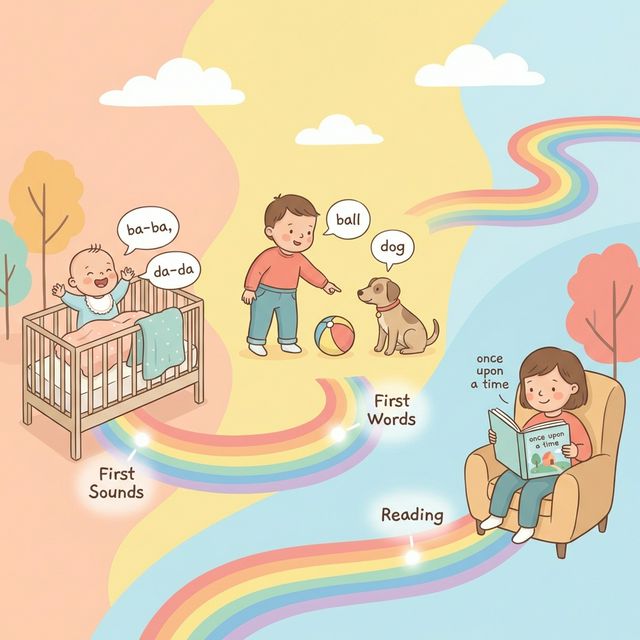
12-18 Months: First Words Period
During this period, children typically use 3-10 words. Basic words like "mama," "dada," and "water" come first. They can understand simple instructions and communicate by pointing. If your 18-month-old isn't using any words, consulting a specialist would be beneficial.
18-24 Months: Vocabulary Explosion
This period is the most exciting stage in language development. Children experience a vocabulary explosion, and their word bank rapidly grows to 50-200 words. They begin forming two-word sentences: "Want water," "Mommy come." Supporting language development during this period is critically important.
24-36 Months: Sentence Building Period
Between ages 2-3, children possess a vocabulary of 200-1,000 words. They form three-to-four-word sentences, answer simple questions, and can tell short stories. If your child is still using single words or is unintelligible at this stage, professional evaluation is recommended.
Possible Causes of Speech Delay
Speech delay can have many causes, and most are manageable conditions:
- Hearing problems: Chronic middle ear infections, fluid buildup, or congenital hearing loss directly affect language development
- Insufficient language exposure: Not talking enough with the child or excessive screen time
- Multilingual environment: Temporary delay in children learning multiple languages is considered normal
- Oral-motor issues: Differences in tongue, lip, or palate structure can make speech difficult
- Developmental conditions: Autism spectrum disorder, auditory processing difficulties
- Premature birth: Language development may be delayed by several months in premature children
10 Practical Solutions You Can Apply at Home
1. Create a Rich Language Environment
Narrate everything you do in daily life out loud. Sentences like "Now we're washing our hands, I'm getting the soap, making bubbles" increase your child's language exposure. Research shows that children exposed to at least 21,000 words per day develop language skills significantly faster.
2. Read Books Together
Reading together for at least 15-20 minutes daily strongly supports language development. Point to images in picture books and ask questions like "What's this?" and "What color is it?" Encourage your child to point to and name objects in the book.
3. Sing Songs and Rhymes
Music is one of the strongest supporters of language development. Nursery rhymes and children's songs develop rhythm sense, teach sound patterns, and reinforce words through repetition. Sing at least 3-4 songs together every day.
4. Use Interactive Conversation Techniques
The expansion technique involves turning your child's single word into a sentence. When your child says "car," you respond "Yes, the red car is going!" This method naturally expands vocabulary and develops sentence-building skills.
5. Learn Through Play
Play is children's most natural learning method. Role-playing with household items, imitating animal sounds, and color-shape matching activities support language development. The Konus Benimle app also supports this process digitally with gamified vocabulary teaching.
6. Manage Screen Time Wisely
The American Academy of Pediatrics recommends limiting screen time as much as possible for children under 2, and no more than 1 hour per day for ages 2-5. However, interactive educational apps are far more beneficial than passive viewing. The key is active participation rather than passive screen consumption.
7. Create Social Interaction Opportunities
Peer interaction strongly supports language development. Encourage your child to communicate with other children at parks, playgroups, or family visits. Children who spend time with peers generally start speaking faster.
8. Encourage Speech by Offering Choices
Instead of anticipating your child's needs, offer choices. Questions like "Do you want water or milk?" encourage verbal expression. Wait for them to use words instead of pointing, but don't pressure them.
9. Be Patient and Consistent
Language development is a marathon, not a sprint. Consistently applying these activities every day makes a big difference over time. Avoid comparing your child to others — every child's development pace is unique.
10. Use Technology Wisely
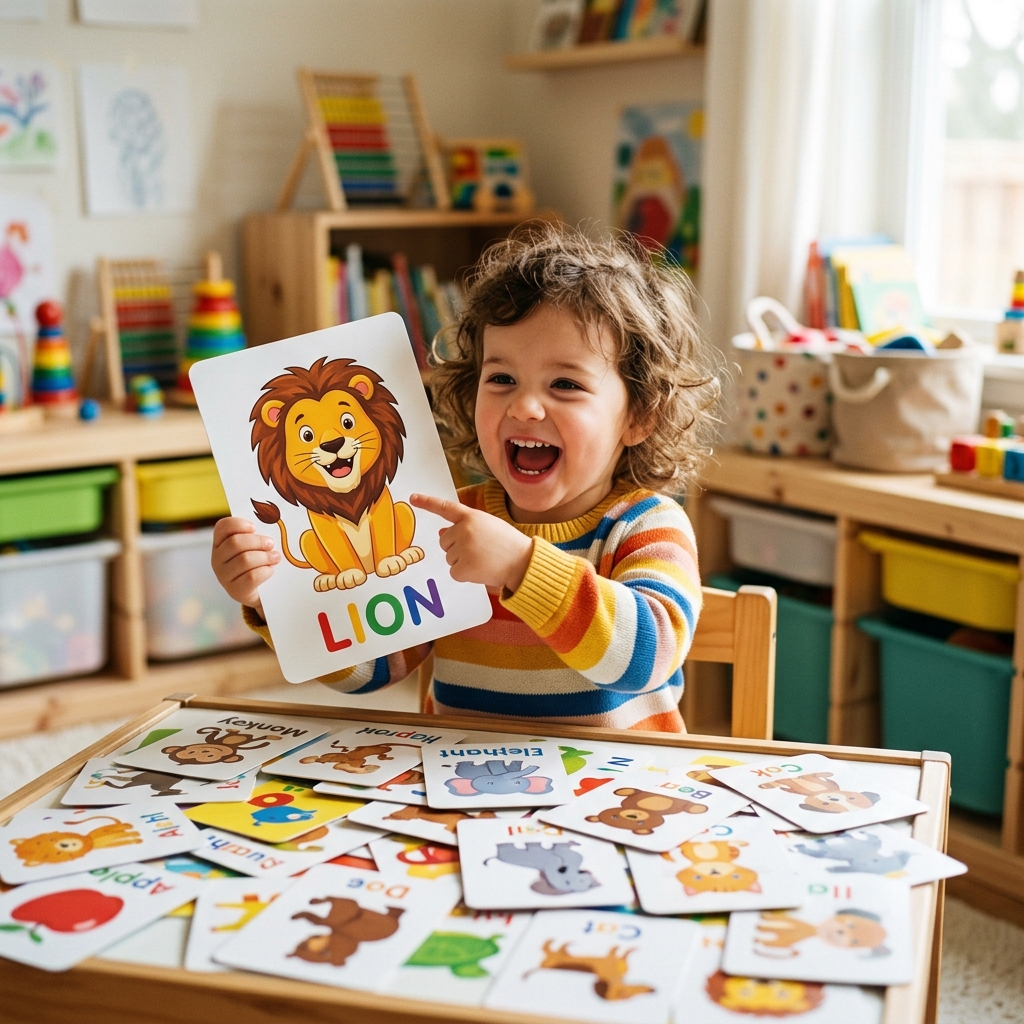
Pedagogically-based apps like Konus Benimle offer powerful tools to support language development. Visual flashcard vocabulary teaching, AI-powered stories, and gamified activities help your child both enjoy and learn. Conscious app use of 15-20 minutes daily complements traditional methods effectively.
When Should You Consult a Specialist?
You should consult a speech-language pathologist or child development specialist if:
- Your child uses no words by 18 months
- Your child uses fewer than 25 words by 24 months
- Your child cannot form two-word phrases by age 2
- Strangers cannot understand your child by age 3
- Your child has lost previously acquired words
- Your child avoids making eye contact
- Your child doesn't understand simple instructions
Early intervention is critically important. Research shows that speech therapy started before age 3 is significantly more effective than therapy begun later.
Conclusion: Every Child Has Their Own Pace
While speech delay can be concerning for many parents, in most cases it's a temporary phase that can be overcome with the right approach. Creating a rich language environment, reading together, playing games, and using technology wisely — these simple but effective steps make a significant difference in your child's language development.
Konus Benimle aims to be parents' strongest ally by presenting scientific methods in an engaging format to support children's language development. Remember: every child starts talking in their own time; what matters is supporting this process correctly.
You're not alone in your child's language journey — with the right tools and patience, everything is possible.