
What Is Self-Confidence and Why Does It Matter So Much in Early Childhood?
Self-confidence is the overall positive belief a child holds about their own abilities, worth, and capacity. A solid sense of self-confidence formed in early childhood lays the groundwork for how a child will cope with challenges throughout life. Research shows that the self-perception formed between ages 2 and 6 leaves lasting effects well into adulthood.
Children with high self-confidence are more open to new experiences, more successful in social relationships, and carry a strong motivation to learn. However, self-confidence is not an inborn trait; it is shaped by daily interactions, experiences, and parenting approaches. The good news is that every parent can nurture their child's self-confidence with the right strategies.
Recognizing the Signs of Low Self-Confidence
Low self-confidence in children is not always immediately visible. However, early intervention becomes possible when certain signs are observed carefully:
- Avoiding new activities or being afraid to try
- Constantly asking for help and hesitating to start tasks alone
- Overreacting to small failures or breaking into tears easily
- Using negative statements like "I cannot do it" or "I am no good"
- Frequently comparing themselves to other children
- Having an excessive need for praise or approval
- Withdrawing from group activities or avoiding taking the lead
Noticing these signs is the first step toward responding with understanding and support rather than alarm. Every child develops at a different pace, and temporary phases can also produce these behaviors.
The Three Building Blocks of Self-Confidence
1. Autonomy: The Feeling of Being Able to Do Things Independently
When children make their own decisions and complete small tasks, a sense of competence develops. Even simple responsibilities like choosing their own clothes, carrying their plate to the table, or tidying their toys send the message "I can do it." Autonomy strengthens a child's sense of control and forms one of the strongest pillars of self-confidence.
2. Mastery: The Experience of Achieving Something
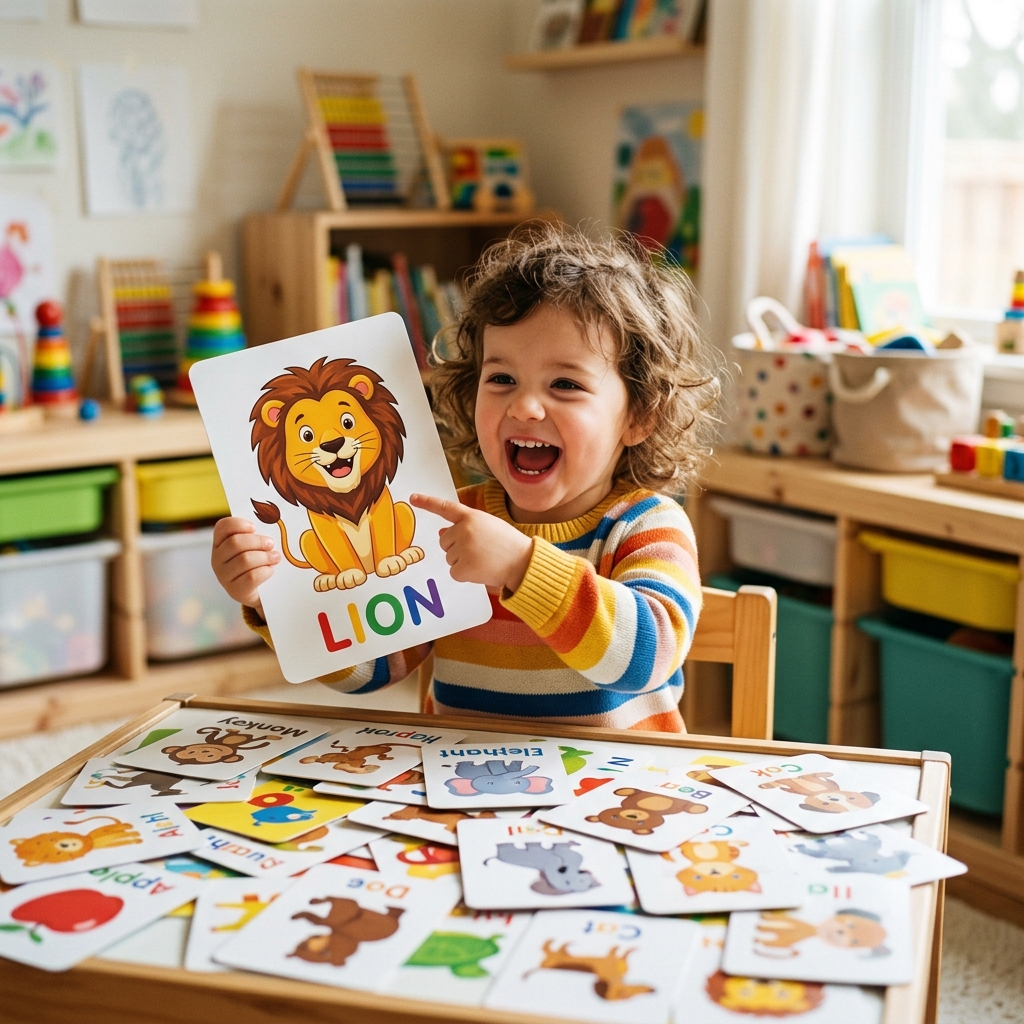
Children experience deep satisfaction when they learn a new skill and successfully apply it. This "mastery experience" is the most powerful source of self-confidence. Completing a puzzle, learning a new word, memorizing a song — every small achievement reinforces the child's perception of competence. In the Konus Benimle app, the positive feedback children receive when they learn new words and use them correctly supports exactly this sense of mastery.
3. Belonging: Feeling Loved and Accepted
The third foundation of self-confidence is a child's sense that they belong to a group and are loved unconditionally. Warm family communication, friendships, and a sense of community nourish the child's belief in their own worth. Unconditional acceptance means the child knows they will be loved even when they make mistakes.
Practical Activities That Build Confidence Every Day
Offer Choices
Give your child small choices every day: "Would you like to wear the blue shirt or the red one?" or "Would you prefer to play at the park or in the garden?" Being able to choose gives a child the feeling that they have a say in their own life and develops decision-making skills.
Assign Age-Appropriate Responsibilities
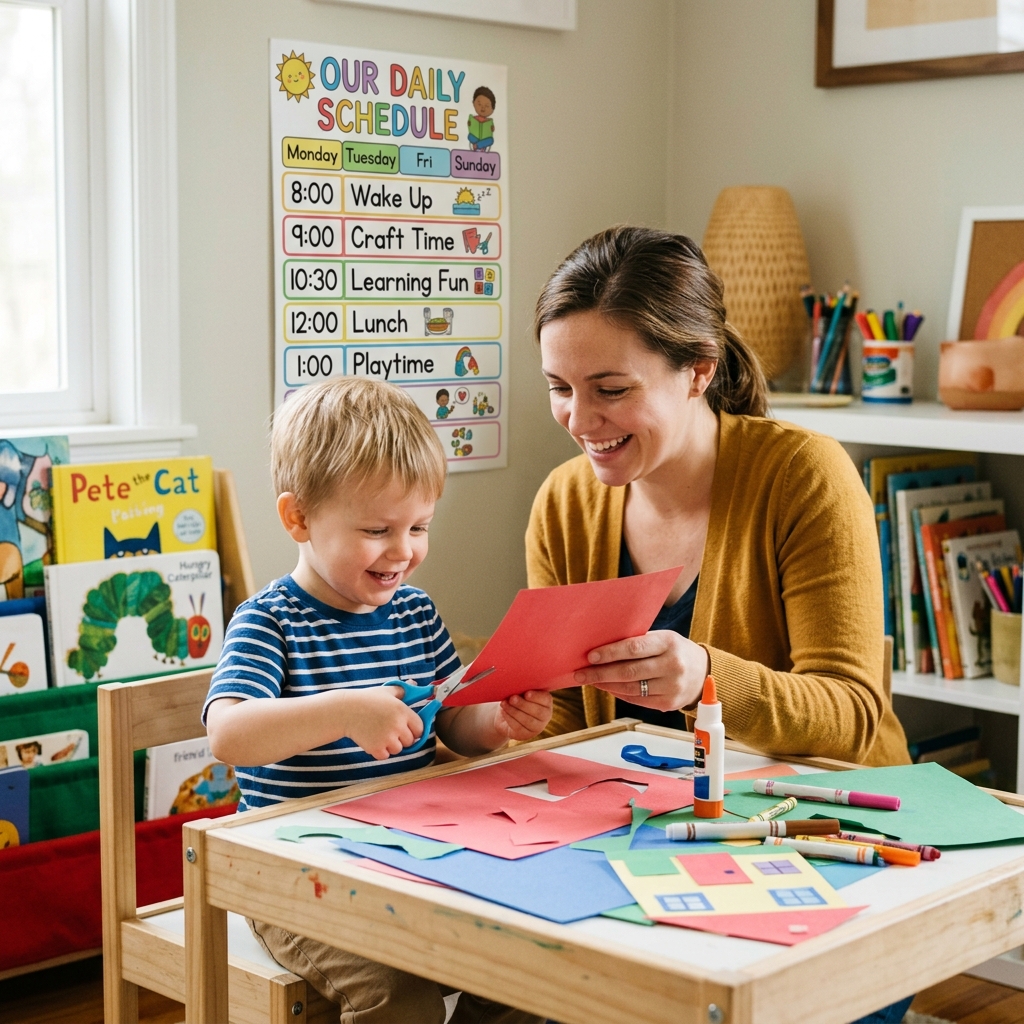
Children feel important and capable when they take on responsibilities. Placing napkins on the table at ages 2-3, giving water to a pet at 4-5, or helping with simple meal preparation at 5-6 — these tasks nourish self-confidence at every stage.
Teach Through Play
During play, let your child take the lead. Let them set the rules and direct the story. This approach helps the child feel that their ideas are valued. By playing vocabulary games together through Konus Benimle, you can support both language development and a healthy sense of achievement.
The Power of Praise: Process-Focused vs. Outcome-Focused
Praise is one of the most powerful tools for building self-confidence — but how you praise matters enormously. Studies show that process-focused praise is far more effective than outcome-focused praise.
Outcome-focused praise examples: "You are so smart!", "You are so talented!", "You are perfect!" These expressions create a fixed perception of ability, and when the child fails, they lead to the thought "I guess I am not talented after all."
Process-focused praise examples: "I can see how hard you worked — that is wonderful!", "You did not give up and you made it!", "You tried a different approach — that was really clever!" Process-focused praise teaches children that effort and persistence lead to success. This approach supports what psychology calls a "growth mindset," a thinking pattern shared by highly successful people.
Key Considerations When Praising
- Be specific: Instead of "Nice drawing," say "The colors you chose for your drawing go so well together"
- Be genuine: Children can sense exaggerated or insincere praise
- Focus on effort: Appreciate the work put in regardless of the outcome
- Avoid comparisons: Statements like "You did better than your sister" cause harm
Encouraging Independence
Independence is the fuel that powers self-confidence. When your child is struggling with a task, rather than intervening immediately, give them time and space. If they are trying to tie their shoes but finding it difficult, instead of doing it for them say "Keep trying — I am here to help if you need me."
Allow safe risk-taking: climbing a little higher at the park, trying a new food, or talking to an unfamiliar child. Every successful attempt strengthens the child's belief that "I can handle this."
Dealing with Failure and Frustration
Confident children are children who are not afraid of failure. For this reason, normalizing failure as a natural part of learning is critically important.
- Share your own mistakes: Saying "I made a mistake at work today too, then I fixed it" shows the child that errors are normal
- Name their emotions: "I understand you feel disappointed — that is a tough feeling" supports emotional intelligence
- Encourage solution-oriented thinking: "It did not work this time — how else might we try?" redirects the child toward trying again
- Show patience: Give your child room to cry or feel frustrated. Let them express their emotions rather than suppressing them
The Strong Link Between Language Skills and Self-Confidence
Children who can express themselves effectively tend to have higher self-confidence. Being able to put feelings, wishes, and thoughts into words gives a child a sense of power and control in communication. Children with a broad vocabulary feel more comfortable in social settings and build healthier relationships with their peers.
The Konus Benimle app helps children expand their vocabulary in Turkish, English, and German, paving the way for self-expression in multiple languages. Being able to communicate in more than one language gives children a unique sense of competence and lasting confidence.
Avoiding the Comparison Trap
Comparing children to siblings, peers, or other kids is one of the most damaging things you can do to self-confidence. Sentences like "Look, your friend can do it — why can't you?" cause the child to measure their own worth against others.
Instead, compare the child to their own past performance: "Last week you could not do this puzzle, but this week you finished it — look how much you have grown!" This approach helps the child see their own progress and feel proud of themselves.
Age-Specific Confidence Support
Ages 2-3: Laying the Foundation
During this period, children begin seeking independence. "I do it myself!" is a phrase you will hear often. To support them:
- Offer simple choices (two options are enough)
- Allow them to eat and dress by themselves (even if things get messy)
- Notice and celebrate every small achievement
- Create routines — predictability provides a sense of security
Ages 4-5: The Social Confidence Phase
Friendships take center stage. Children want to feel they belong to a group. To support them:
- Teach social skills through play (taking turns, sharing)
- Praise successful social interactions
- Provide opportunities to experience different environments
- Support problem-solving skills: "How would you solve this?"
Ages 5-6: The Competence and Mastery Phase
As school approaches, academic and physical skills come to the forefront. To support them:
- Offer opportunities to learn new skills (swimming, cycling, drawing)
- Encourage them to complete projects from start to finish
- Strengthen independence skills in preparation for school
- Make achievements visible: create a progress chart or portfolio
Conclusion: Self-Confidence Is Not a Gift — It Is a Journey
Building self-confidence in children is not a one-time event but an ongoing process that continues every day. Patience, consistency, and unconditional love are the most important fuel for this journey. Start small today: offer your child a choice, praise their effort, and stand by them when they stumble.
Remember: the most powerful tool for raising a confident child is helping them find their own voice. Language skills, emotional expression, and social competence — these are all building blocks of self-confidence, and they grow stronger with every small step taken each day.