What Is a Pronunciation Disorder?
A pronunciation disorder (articulation disorder) occurs when a child cannot produce certain sounds appropriately for their age. Saying "W" instead of "R," lisping on "S" sounds, or using "T" instead of "K" are the most common examples. Approximately 10-15% of preschool children experience some type of pronunciation problem.
The key is knowing which sounds are expected at which age. Some sounds naturally develop later, and mistakes made at an early age are completely normal.
Sound Development Chart by Age
Age 2: Early Sounds
- B, M, P, D, N, T — lip and tongue tip sounds
- Words beginning with these sounds should be clear
- About 50% of speech should be understandable
Age 3: Middle Sounds
- In addition: K, G, F, Y, H
- Should clearly say words like "cat," "go," "fish"
- About 75% of speech should be understandable
Age 4: Advanced Sounds
- Added: S, Z, SH, CH, J, L
- Most sounds should be produced correctly at this age
- More than 90% of speech should be understandable
Ages 5-6: Difficult Sounds
- Last developing sounds: R, V, TH
- "R" is the latest maturing sound; struggling until age 6 is normal
- Speech should be almost entirely understandable at this age
Most Common Pronunciation Problems
Sound Substitution
The child replaces a difficult sound with an easier one:
- "Wabbit" instead of "Rabbit" (R → W)
- "Tat" instead of "Cat" (K → T)
- "Thun" instead of "Sun" (S → TH)
This is the most common pronunciation problem and usually corrects with age.
Sound Omission
The child completely drops a sound from the word:
- "Nana" instead of "Banana"
- "Poon" instead of "Spoon"
Sound Addition
An extra sound is added to the word:
- "Buhlack" instead of "Black"
Lisping
The tongue protrudes between the teeth when producing "S" and "Z" sounds. Professional evaluation is recommended if this continues after age 4.
Causes of Pronunciation Disorders
- Developmental process: The most common cause — the child's speech muscles haven't matured yet
- Hearing problems: A child who can't hear sounds clearly can't pronounce correctly
- Oral-motor weakness: Insufficient tongue, lip, or jaw muscles
- Structural differences: Tongue-tie, palate issues
- Prolonged pacifier use: Extended pacifier use can affect mouth structure
- Insufficient language model: Lack of clear speech models in the child's environment
8 Correction Methods You Can Apply at Home
1. Be the Correct Model
When your child mispronounces a word, don't correct them — naturally repeat the correct form. When the child says "wabbit," say "Yes, rabbit! A fluffy rabbit." This method provides the correct model without embarrassing the child.
2. Mirror Practice
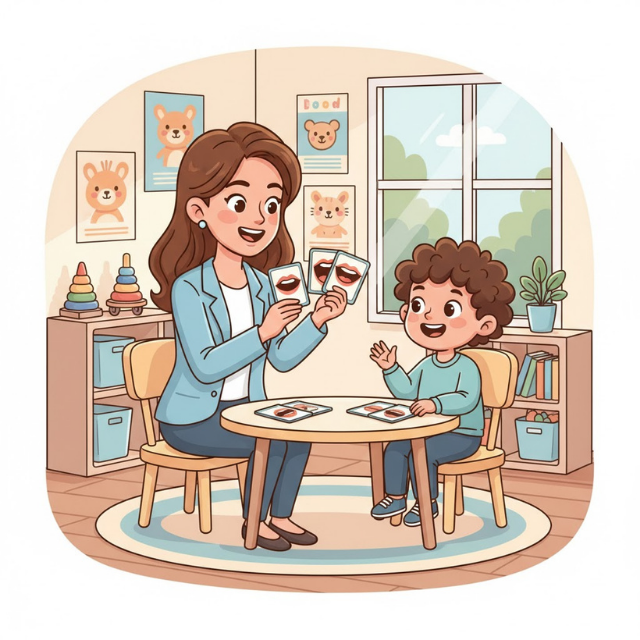
Practice difficult sounds with your child in front of a mirror. Show your tongue and lip positions. This visual feedback makes sound production easier.
3. Practice Through Play
Play games with words containing the target sound. A "hiss like a snake: ssss" game for the "S" sound or "make an engine sound: rrrr" for the "R" sound is both fun and effective.
4. Songs and Rhymes
Choose songs and rhymes containing the target sound frequently. Music's rhythm ensures the sound is repeated in the correct position.
5. Mouth Exercises
Do fun exercises to strengthen oral-motor skills:
- Tongue movement games in different directions
- Blowing bubbles — develops lip and breath control
- Drinking through a straw — strengthens mouth muscles
- Making funny faces — exercises facial muscles
6. Speak Slowly and Clearly
Speak slowly and clearly when talking to your child. Children model their parents — the clearer you speak, the clearer your child learns to speak.
7. Isolate the Target Sound
Practice the problematic sound alone first, then with syllables, then words, and finally sentences. This gradual approach increases success.
8. Use Technology as Support
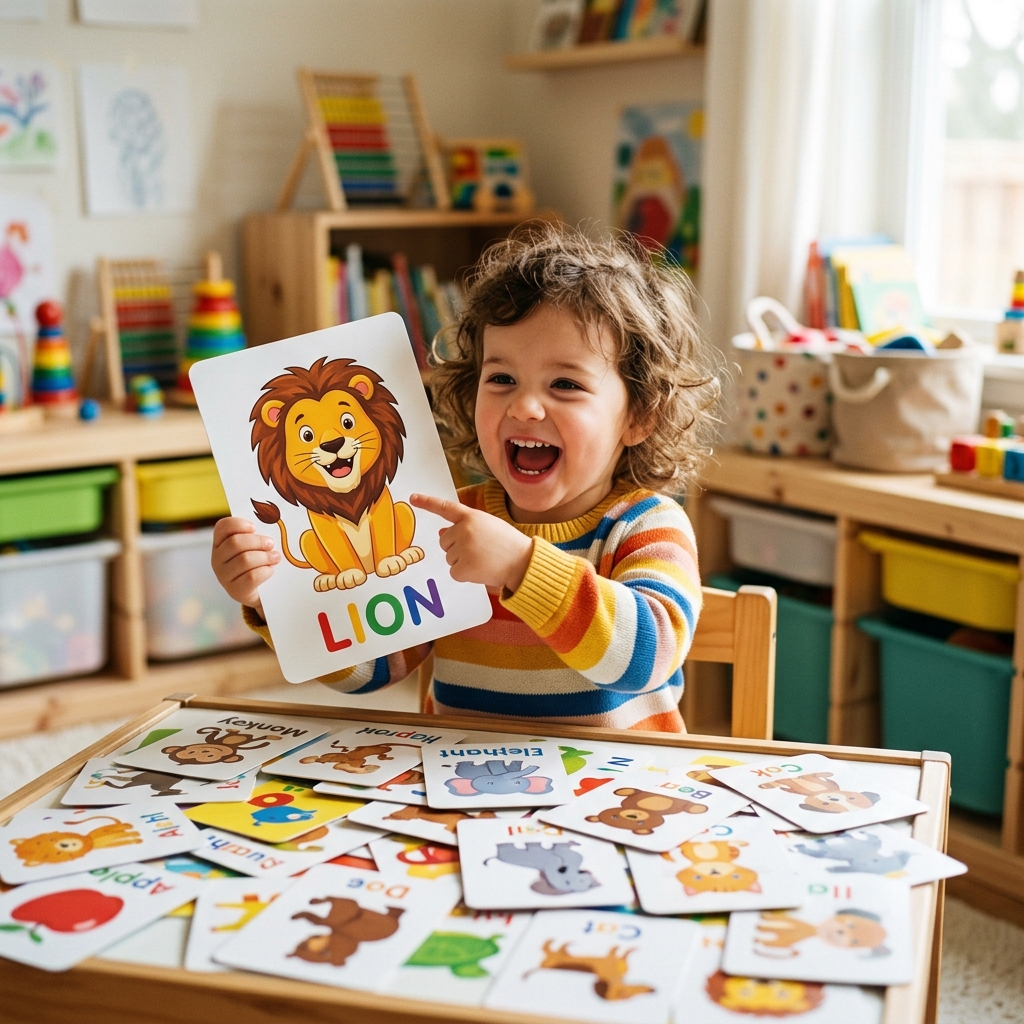
Educational apps like Konus Benimle provide correct pronunciation models during vocabulary teaching. Visual flashcard matching activities help children practice words containing target sounds in a fun way. The trilingual structure (Turkish, English, German) also builds familiarity with different sound systems.
When Should You Consult a Specialist?
- Speech is largely unintelligible at age 3
- Still can't produce several basic sounds at age 4
- Significant pronunciation errors continue after age 5
- The child is embarrassed or avoids speaking
- Pronunciation problems negatively affect social interaction
- Family history of speech disorders
Early intervention provides the highest success rate in pronunciation disorders.
Conclusion: Every Sound Comes in Its Time
Pronunciation disorders can be concerning for parents, but in most cases they're developmental and correct with the right approach. Being patient, providing correct models, and practicing through play are the most effective methods. Every child's sound development timeline is different — what matters is continued progress.
Konus Benimle ensures children encounter correct pronunciation models while learning words. Visual cards and AI stories present every word in the right context with correct pronunciation.
Every sound matures in its own time — patience and proper support are your strongest allies.