
Why Are Fathers Important in Language Development?
When language development is mentioned, mothers usually come to mind. However, research reveals that fathers play a unique and indispensable role in their children's language development. A 2019 Harvard University study showed that children who regularly interact with their fathers have significantly more developed language skills than their peers.
How do fathers contribute differently to language development? Scientific research shows that father-child interaction has different but complementary characteristics compared to mother-child interaction.
Father-Specific Contributions: What Science Says
The Bridge Hypothesis
Language development researchers have discovered that fathers take on a "bridge" role in communication with their children. What does this mean? While mothers generally communicate using words the child already knows, fathers tend to use new and complex words more frequently. This encourages the child to "step outside their comfort zone" and expands their vocabulary.
Researchers call this the "bridge hypothesis": fathers create a bridge between the child's known language world and the more complex language of the outside world.
Different Communication Style
Compared to mothers, fathers generally:
- Ask more questions — this encourages the child to think and respond
- Use longer and more complex sentences
- Request more explanations: "What does that mean?", "Why do you think so?"
- Use different language patterns during physical play
- Predict less and wait for the child to express themselves
These differences aren't disadvantages — on the contrary, they are complementary features that enrich language development.
Language Teaching Through Play
Father-child play tends to be more physical and energetic: wrestling, tossing in the air, running, chase games. The language used during these games is different — action words, directional sentences, and excitement expressions are more intense. This variety expands the child's language repertoire.
Research Findings
Impact on Vocabulary
Research from the University of North Carolina showed that the quality of father-child interaction at 6 months significantly predicted the child's vocabulary at age 3. This effect appears independently of the mother's influence — meaning the father's contribution doesn't replace the mother's but complements it.
Impact on Reading Skills
Children who regularly read books with their fathers show higher reading skills during school years. This is because fathers tend to ask more questions while reading and encourage the child to think about the story.
Social Communication Skills
Children who spend quality time with their fathers communicate better in social settings. The father's role as "representative of the outside world" strengthens the child's ability to communicate with different people.
8 Practical Tips Fathers Can Apply
1. Read Books Together Every Day
Reading together for at least 10-15 minutes daily strongly supports language development. Don't just read — ask questions, make predictions, discuss pictures. Questions like "What do you think happens next?" develop thinking and expression skills.
2. Talk During Play
Narrate what you're doing during physical games: "Now I'm throwing you up! Up, up, up!" This action-language pairing naturally expands the child's vocabulary.
3. Participate in Daily Routines
Daily routines like bathing, feeding, and dressing are excellent language learning opportunities. Taking an active role strengthens both the father-child bond and increases language exposure.
4. Tell Stories
You can tell stories without a book. Share your childhood memories, imaginary adventures, or narrate daily events. Stories from dad are special and precious to children — these moments strengthen both emotional bonds and language skills.
5. Dive Into Your Child's Interests
Does your child love dinosaurs? Learn dinosaur names together. Love cars? Name car parts. Interest-based conversations increase the child's motivation and vocabulary learning speed.
6. Use Technology Together
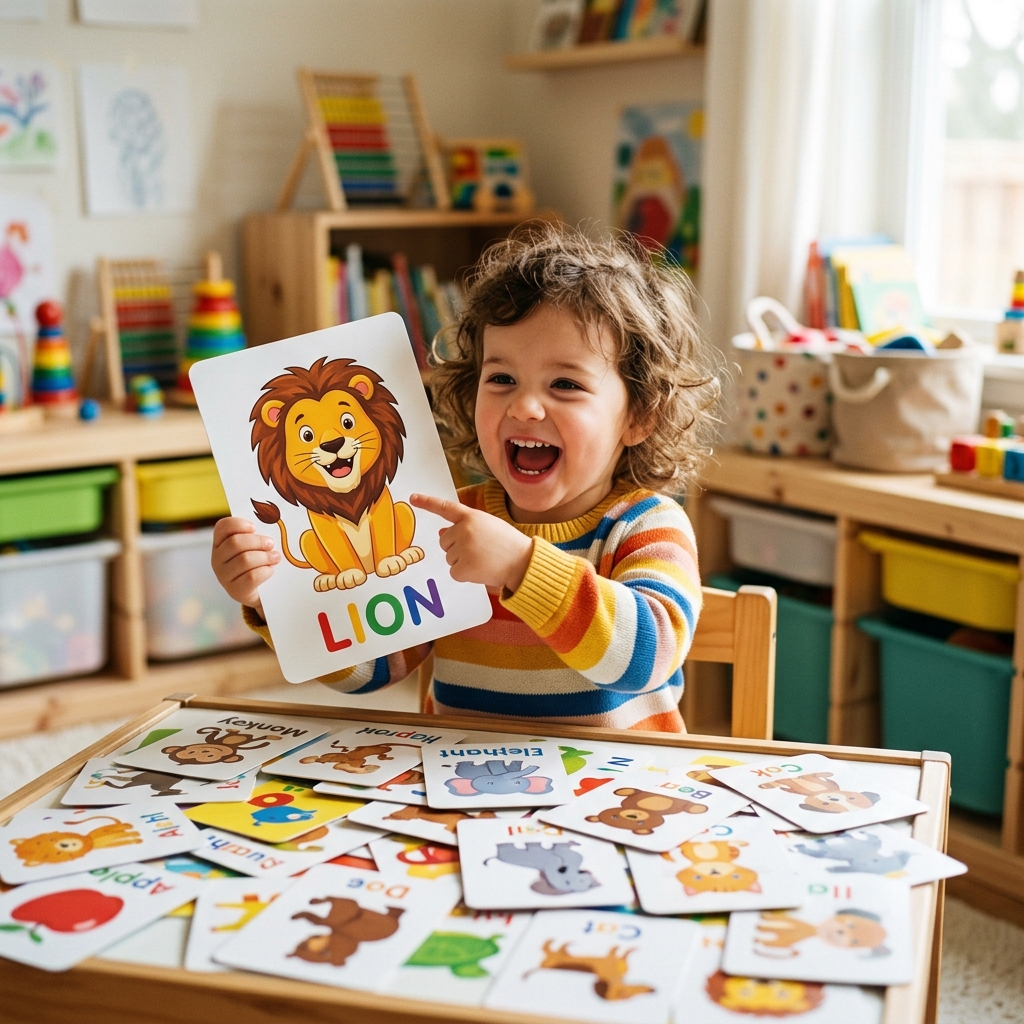
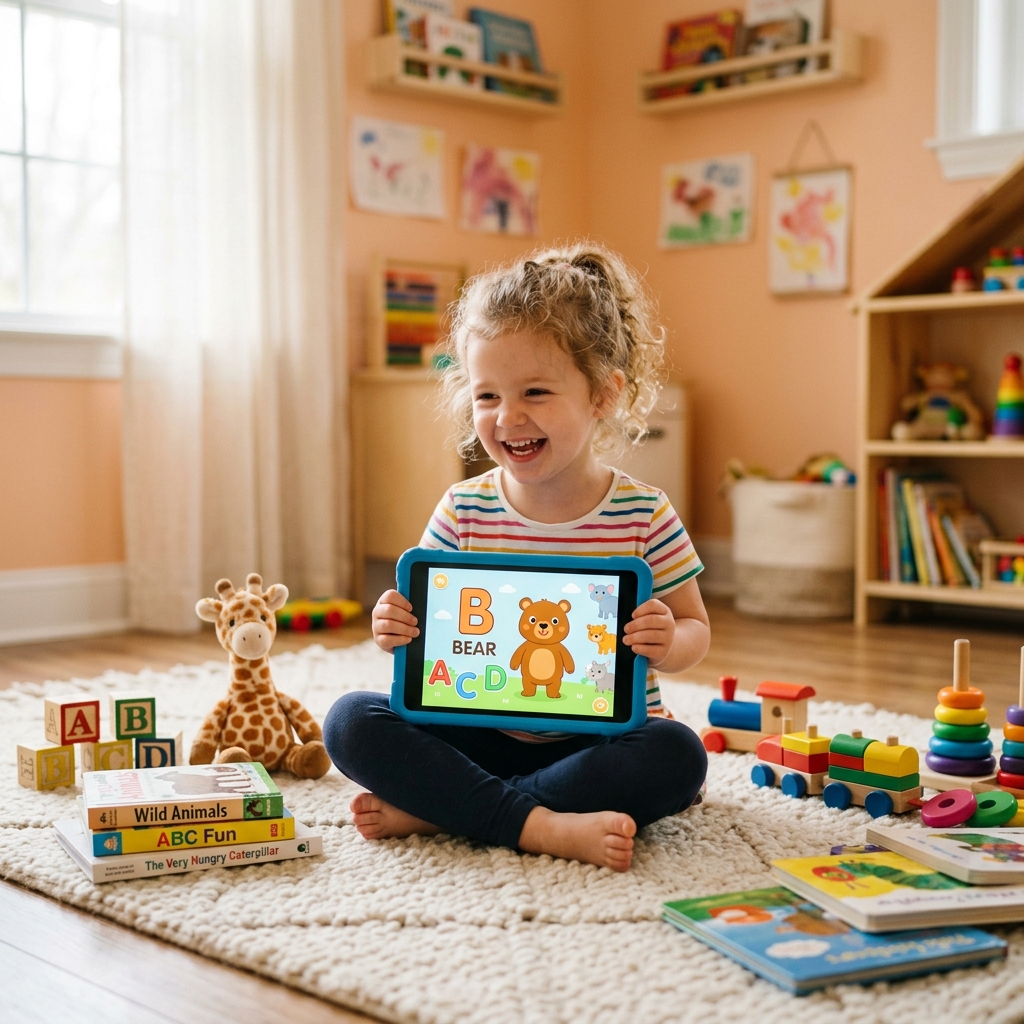
Use educational apps like Konus Benimle with your child. Explore visual cards together, say words together, and listen to AI stories together. Father-child joint digital learning experiences are both fun and effective.
7. Be a Patient Listener
Listen patiently when your child speaks. Don't interrupt, wait for them to finish their sentences, and show genuine interest in what they say. Use encouraging phrases like "Tell me, what happened next?"
8. Take an Active Role in Multilingual Environments
If multiple languages are spoken in your family, the father consistently using one language is ideal for the OPOL method. For example, dad speaks English while mom speaks Turkish. This consistency helps the child distinguish between languages.
Barriers and Solutions
"I Can't Find Enough Time"
Quality time doesn't mean long time. Even 15-20 minutes daily of focused, one-on-one interaction makes a big difference. Create short but quality moments during breakfast, dinner, or before bedtime.
"I Don't Know What to Do"
You don't need to do anything special. Simply narrating everything you do is enough. Describe what you see while driving, name products while shopping, count ingredients while cooking.
"My Partner Does It Better"
Don't compare. A father's contribution to language development is different from a mother's, and this difference is valuable. Each parent's unique contribution supports the child's language development most comprehensively.
Conclusion: A Father's Voice Is a Powerful Voice
Fathers have an irreplaceable role in their children's language development. With different communication styles, play approaches, and language patterns, they complement mothers' contributions and enrich the child's language world. Not just on Father's Day, but every day — a book read, a story told, a game played leaves a lasting mark on your child's language development.
Konus Benimle is a fun language learning tool that fathers can use with their children. Visual cards, AI stories, and trilingual content strengthen both the father-child bond and support language development.
Every father is a teacher — and the most powerful lesson is time spent together.