What Is Visual Learning and Why Is It So Effective?
The human brain processes visual information 60,000 times faster than text. This incredible statistic clearly explains why visual learning is so critical in child education. From the moment they are born, children explore the world through their eyes — colors, shapes, and facial expressions are their first "teachers."
Visual learning is the method of processing and remembering information through images, diagrams, colors, and spatial arrangements. Approximately 65% of children are visual learners, showing how important visual elements are in educational strategies.
Scientific Foundation: Dual Coding Theory
The Dual Coding Theory, developed by Allan Paivio in the 1970s, scientifically explains why visual learning is effective. According to this theory, the brain processes information through two different channels:
- Verbal channel: Words, sentences, and sounds
- Visual channel: Images, shapes, and spatial information
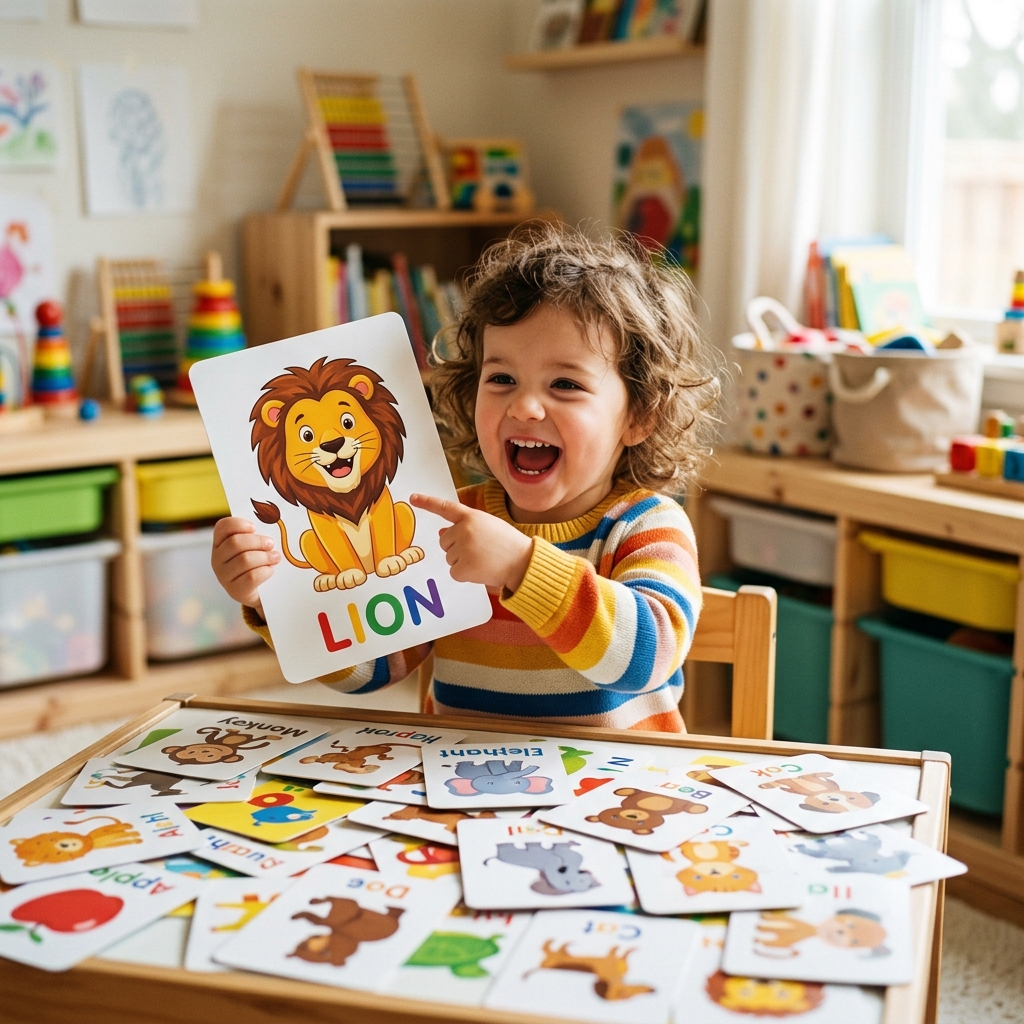
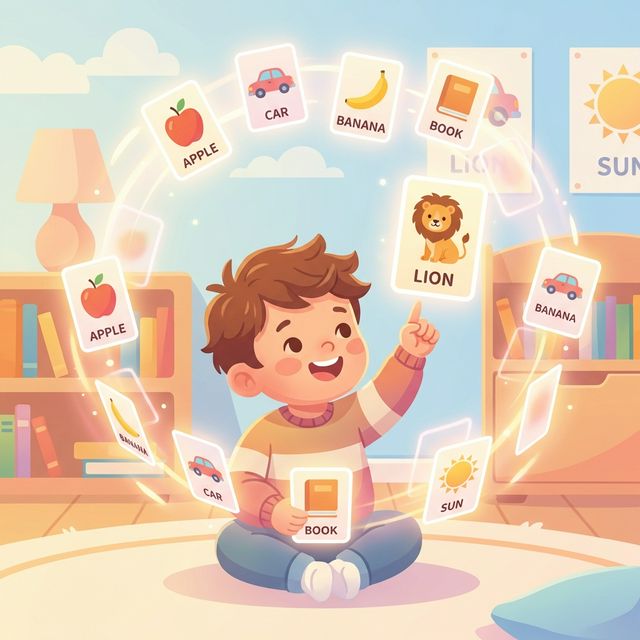
When information is coded both verbally and visually, two separate memory traces are created in the brain. This dual coding dramatically increases recall rates. This is the fundamental reason why flashcards — with a picture on one side and a word on the other — are so effective.
Picture Superiority Effect
The phenomenon known as the "Picture Superiority Effect" in cognitive psychology proves that people remember pictures far better than words:
- Recall rate of heard-only information after 3 days: 10%
- Recall rate of heard + visually supported information after 3 days: 65%
This sixfold difference clearly shows why visual materials are indispensable in child education.
Flashcards: The Timeless Learning Tool
Flashcards are learning tools that have been used for centuries with scientifically proven effectiveness. They are considered the gold standard for vocabulary teaching in children.
Why Are Flashcards Effective?
- Active Recall: The child's brain actively thinks when seeing the card
- Spaced Repetition: Regular repetition strengthens long-term memory
- Multisensory Input: Seeing image + hearing word + speaking word = learning through 3 channels
- Focus: Each card focuses on a single concept, reducing cognitive load
Advantages of Digital Flashcards
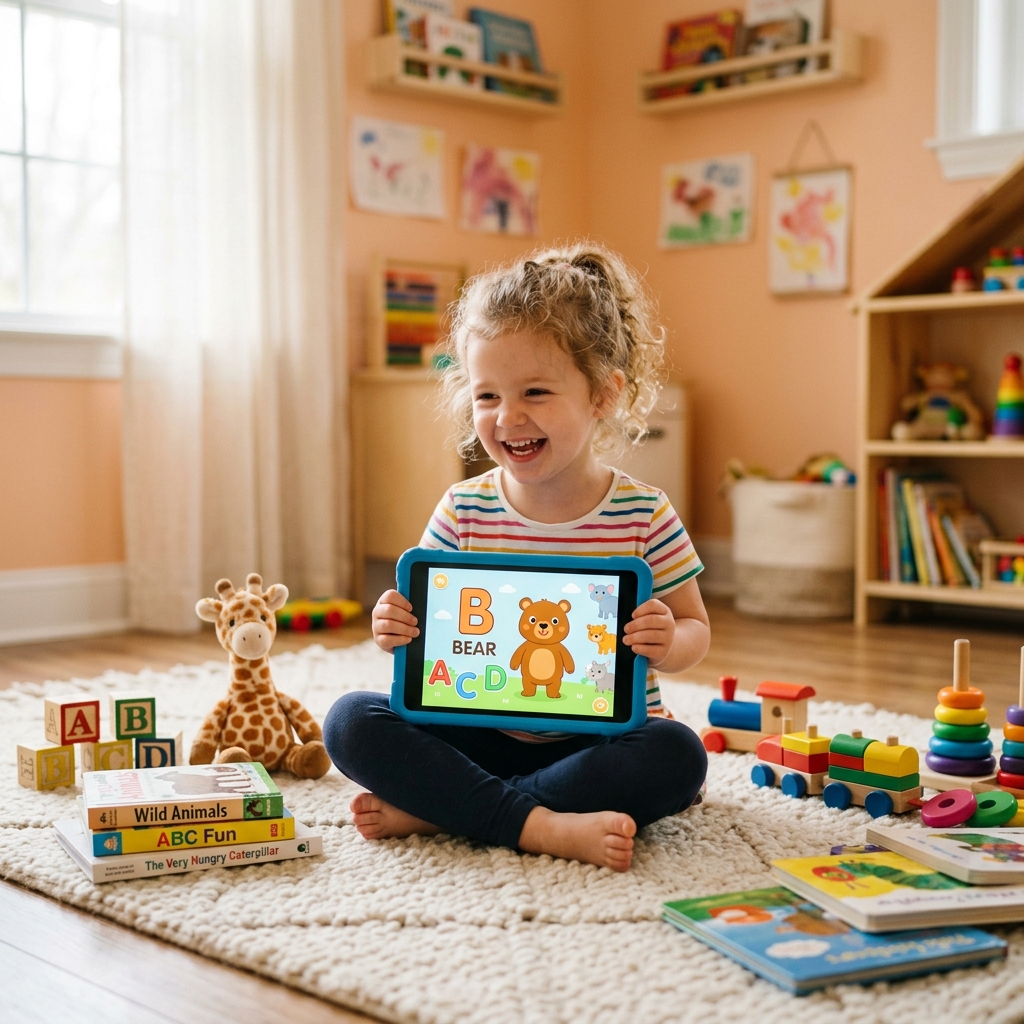
Digital flashcards offer additional advantages over traditional paper cards: audio pronunciation, animations, progress tracking, and multilingual learning. Konus Benimle combines digital flashcards with multilingual support, teaching children vocabulary in 3 different languages with professional visuals and native speaker pronunciations.
8 Golden Rules for Teaching Words with Visual Learning
1. Start with Concrete Concepts
Begin with concrete, visualizable concepts like animals, fruits, and colors. Abstract concepts can be introduced in later stages.
2. Organize by Categories
Teach words in categories: "Animals," "Foods," "Body Parts." Categorization helps the brain organize information.
3. Use Realistic Visuals
Use realistic, high-quality visuals so children can connect with the real world.
4. Engage Multiple Senses
Show the picture, say the word, ask the child to repeat. Include touch when possible.
5. Repeat, Repeat, Repeat
According to Ebbinghaus's Forgetting Curve, 70% of learned information is forgotten within 24 hours. Regular repetition prevents this loss. 10-15 minutes daily, 5 days a week is an ideal schedule.
6. Use Gamification
Matching games, "What is this?" competitions, and reward systems increase motivation.
7. Create Context
Use learned words in stories. "One day, a little cat sat under a big tree" reinforces words in a meaningful whole.
8. Respect the Child's Pace
Every child learns at a different pace. Follow the child's interest rather than forcing. What they can't learn today, they may easily learn tomorrow.
Age-Based Visual Learning Guide
- 0-1 years: High-contrast black and white images, simple shapes
- 1-2 years: Single-object, colorful large pictures, animal sound matching
- 2-3 years: Simple vocabulary flashcards (animals, fruits, colors)
- 3-5 years: Multilingual word cards, category games, story cards
- 5-7 years: Reading readiness cards, sentence building, word families
Conclusion
Visual learning is one of the methods best suited to children's natural learning tendencies. Flashcards are powerful tools based on scientific foundations like dual coding theory and the picture superiority effect. Digital education apps like Konus Benimle combine these scientific methods with modern technology, offering children an effective and enjoyable learning experience.
Remember: Every picture is worth a thousand words — but the right picture can teach your child thousands of words.