What Is Sibling Jealousy and Why Is It Inevitable?
Sibling jealousy is a natural and universal emotion that a child experiences from sharing parental attention, love, and resources with a sibling. Research shows that sibling jealousy occurs in nearly every family at some point and is a normal part of child development. The key is not to suppress this feeling but to help the child cope with it in a healthy way.
Jealousy intensifies especially during situations like the birth of a new sibling, a sibling achieving something notable, or the perception that parental attention is not equally distributed. Children express this emotion in different ways: some verbalize it openly, while others show it through behavioral changes.
Signs of Sibling Jealousy by Age Group
Ages 2-3: Regression to Baby-Like Behaviors
When a new sibling arrives, young children often experience regression. Losing toilet training, requesting a bottle, seeking a pacifier, or speaking in baby talk are common behaviors during this period. Through these behaviors, the child sends the message: "I am still your baby too — do not forget me."
Ages 3-5: Direct Expression and Physical Reactions
Children in this age group can express their jealousy more directly. Statements like "Send the baby back" or "I do not like her" may be heard. Some children may physically intervene with their sibling: pushing, hitting, or taking their toys are common behaviors.
Ages 5-7: Comparison and Perceived Unfairness
As children approach school age, they begin to understand concepts of comparison and justice. Expressions like "You always buy things for them" or "You love them more" are typical indicators of this period. The child constantly compares themselves to their sibling and feels a sense of injustice.
Preparing Before the New Sibling Arrives
The most effective way to reduce sibling jealousy is advance preparation. This process, which starts months before birth, makes it easier for the older child to adapt to the new situation.
- Share the pregnancy: Tell the child about the baby in an age-appropriate way. Show ultrasound photos and let them feel the baby move.
- Assign a role: Saying "You are going to be a big brother/sister" gives the child a special sense of responsibility and pride.
- Use books: Read children s books about new siblings together. Stories help children understand their feelings.
- Maintain routines: Avoid making major changes to the child s routines before the baby arrives. Schedule room changes or daycare starts well before or after the birth.
- Be realistic: Instead of "You will play with the baby," provide realistic information like "Babies sleep and cry a lot, but as they grow, they will play with you."
The First Days After Birth: The Critical Period
The first days when the baby comes home are the most critical period when the foundation of the sibling relationship is laid. Small gestures during this time make a big difference.
- Dedicate special time to the older child: Just 15-20 minutes of exclusive time with the older child each day significantly reduces feelings of jealousy.
- Be careful when introducing the baby: Use a positive introduction like "This is your sibling who came to see you."
- Let them help: Small tasks like fetching a diaper or singing a lullaby make the older child feel important.
- Guide visitors: Visitors typically focus on the baby. Gently ask them to engage with the older child first.
Being Fair: Equality vs. Equity
One of the most common mistakes parents make is defining fairness as "equality." However, each child has different needs, and true fairness means giving each child what they need.
For example, the baby may need more physical care while the older child needs emotional attention. Instead of "I will buy the same thing for both of you," asking "What do you need?" makes the child feel valued. Using the Konus Benimle app to create dedicated learning time for the older child supports their sense of having their own special activity and feeling unique.
What to Do and What to Avoid During Jealousy Moments
What to Do
- Acknowledge the feeling: Saying "You feel jealous, and that is completely normal" helps the child feel understood.
- Name the emotion: Children struggle to identify their feelings. When you name them, their emotional intelligence develops.
- Teach alternative behaviors: Offer guidance like "Instead of hitting your sibling, come to me and tell me you are angry."
- Reinforce positive moments: Notice and praise moments when siblings spend quality time together.
What to Avoid
- Do not compare: Statements like "Your sibling is better behaved than you" deepen jealousy.
- Do not suppress the emotion: Saying "Do not be jealous, it is shameful" causes the child to hide their feelings.
- Do not take sides: Always blaming the older child in conflicts creates a sense of injustice.
- Do not overreact: Excessive reactions to jealousy behaviors strengthen the child s attention-seeking strategy.
Activities That Strengthen Sibling Bonds
Building a strong bond between siblings is the most lasting way to reduce jealousy. Here are daily activities that strengthen sibling connections:
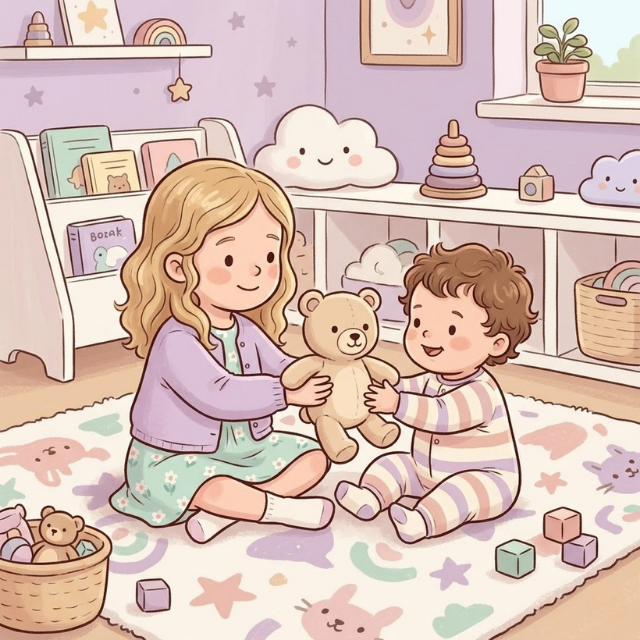
- Reading together: Encourage the older child to "read" picture books to the baby. This activity creates both responsibility and bonding.
- Team games: Choose games where siblings play together rather than against each other.
- Joint projects: Creative activities like drawing together or playing with playdough develop sharing skills.
- Language learning time: Having the older child teach words to their younger sibling using the Konus Benimle app strengthens both learning and the sibling bond.
Supporting the Sibling Relationship Long-Term
Sibling jealousy usually diminishes over time, but consistent parental attitudes accelerate this process. Supporting each child s individual identity — valuing each one through different interests, talents, and achievements — reduces the need for comparison.
Remember: When managed properly, sibling jealousy teaches children vital social skills like sharing, empathy, patience, and conflict resolution. These skills provide significant advantages in friendships, school life, and careers later on.
When Should You Seek Professional Help?
If jealousy behaviors turn into intense aggression, if the child harms themselves or their sibling, if there have been serious disruptions in sleep and eating patterns for an extended period, or if regression behaviors continue weeks later, it would be beneficial to seek support from a child psychologist. Early intervention protects the health of both the child and the family.