What Is the Montessori Method?
The Montessori method is an educational philosophy developed by Italian physician and educator Maria Montessori in the early 20th century. This approach is based on the child's natural curiosity and desire to learn. The essence of the Montessori philosophy is approaching the child with the understanding of "Help me do it myself." The child learns at their own pace, through their own choices, and through active experiences.
What Are the Core Principles of the Montessori Method?
The success of Montessori education is based on five interconnected core principles:
1. Prepared Environment
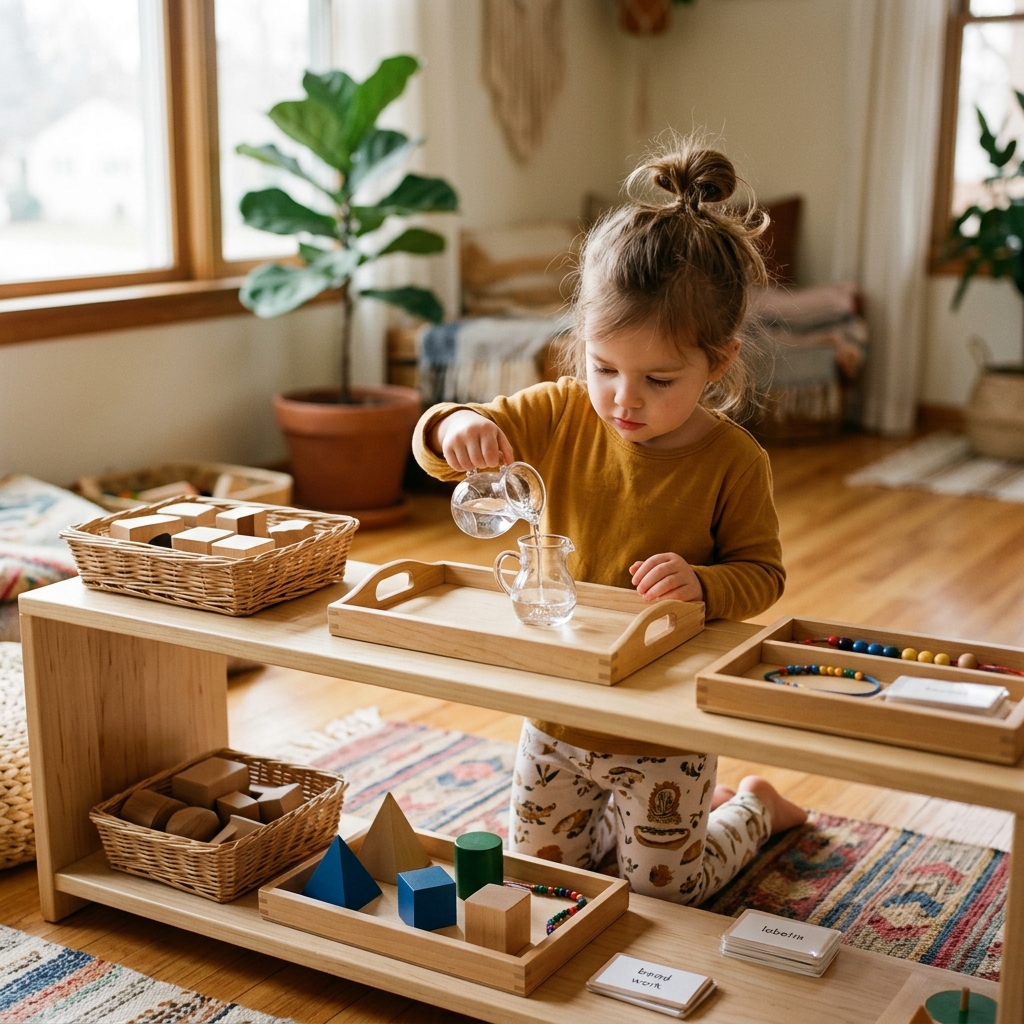
An environment organized to suit the child's size, abilities, and interests forms the foundation of independent learning. Everything should be at a height and arrangement accessible to the child.
2. Independence
Allowing the child to do things on their own develops self-confidence and a sense of competence. Daily activities like dressing, setting the table, and tidying up are opportunities for independence.
3. Observation
The parent or educator identifies the child's interests, strengths, and needs by observing them. These observations guide the adaptation of the environment and activities.
4. Sensitive Periods
Children show intense interest in specific skills during certain periods. There are sensitive periods for language development, order, movement, and sensory exploration. Catching these periods accelerates learning.
5. Free Choice
The child decides what to work on, how long to work, and whether to repeat. This freedom strengthens intrinsic motivation.
How to Create a Montessori Environment at Home
You don't need expensive materials or a special room to apply the Montessori method. You can organize your existing spaces at home according to Montessori principles.
Bedroom
- Floor bed: Use a low bed so the child can independently get in and out of bed.
- Accessible wardrobe: Clothes at the child's reachable height support dressing independence.
- Simple decoration: A few selected toys and natural colors reduce distraction.
- Full-length mirror: A mirror where the child can see themselves supports self-awareness.
Kitchen
- Learning tower: A stepped stool that allows the child to safely reach the counter enables participation in food preparation.
- Child-sized plates and cups: Unbreakable, child-sized materials encourage independent eating.
- Snack station: Having healthy snacks within the child's reach supports independent eating.
Play and Work Area
- Low shelves: Toys and materials are arranged on open shelves where the child can see and reach them.
- Rotation system: Instead of putting out all toys at once, place 4-5 on shelves each week and store the rest.
- Natural materials: Toys made from wood, fabric, and natural materials should be preferred.
- Practical life area: Child-sized versions of cleaning tools like brooms, cloths, and sponges encourage participation in household chores.
Montessori Activities at Home by Age
You can support your child's development with Montessori activities suitable for each age group:
Ages 1-2: Sensory Exploration
- Sensory bins: Bins filled with different textures like rice, pasta, and sand support sensory exploration.
- Matching games: Color, shape, or object matching activities strengthen cognitive development.
- Pouring and transferring: Transferring water or dry materials from one container to another develops hand-eye coordination.
- Music and movement: Simple instruments and dance support sensory and motor development.
Ages 2-4: Practical Life Skills
- Self-dressing: Skills like buttoning, zipping, and putting on shoes are practiced.
- Kitchen help: Simple tasks like washing fruit, kneading dough, and tossing salad are assigned.
- Cleaning participation: Household chores like wiping the table, picking up toys, and watering plants are shared.
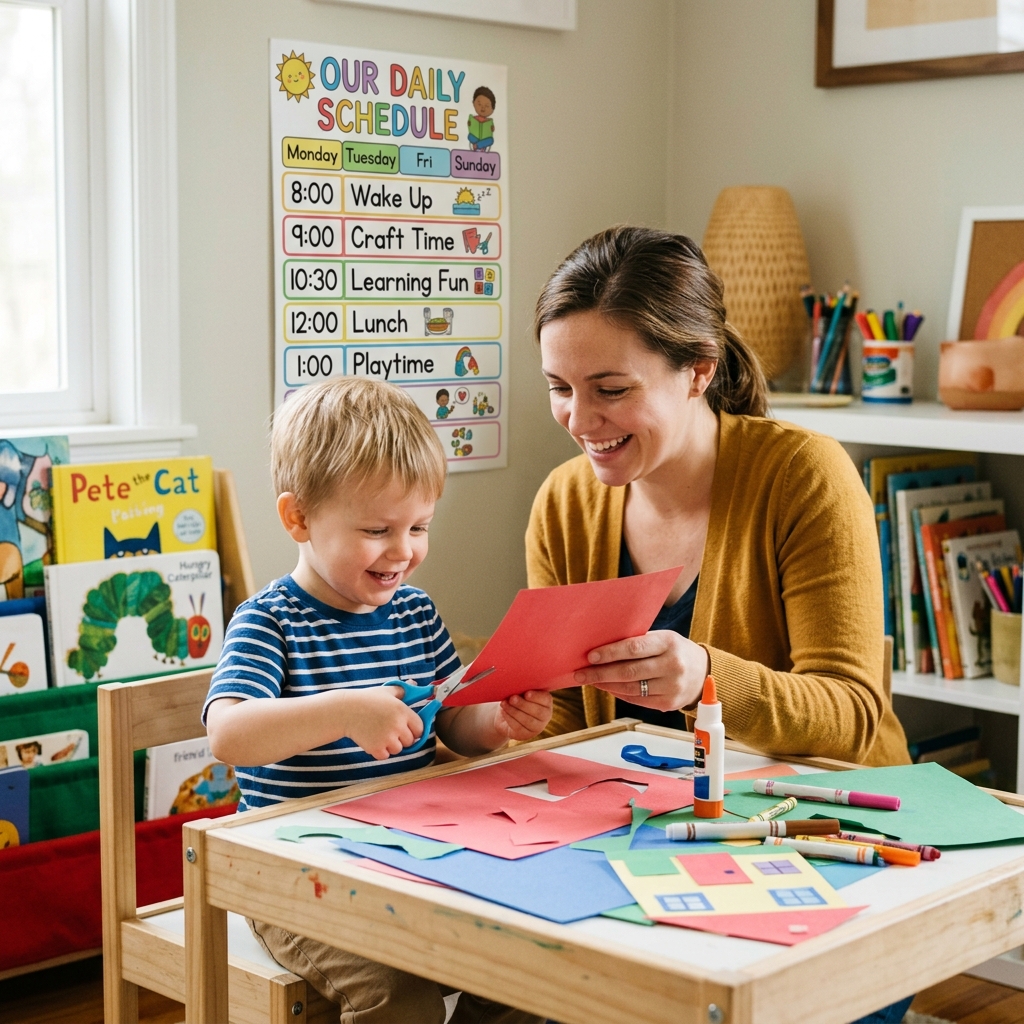
- Art activities: Creative activities like painting, clay play, and collage making are offered.
Ages 4-6: Academic Preparation
- Letter and number work: Academic foundations are laid with concrete materials like sandpaper letters and bead stringing for number learning.
- Nature observation: Scientific activities like growing plants, observing insects, and tracking weather are conducted.
- Geography: World map puzzles and cultural explorations develop global awareness.
- Language development: Language skills are strengthened through story creation, word games, and apps like Konus Benimle.
The Connection Between Montessori and Language Development
The Montessori method places special importance on language development. Maria Montessori defined ages 0-6 as a critical period for language acquisition.
- Rich language environment: Constantly talking with the child, naming objects, and narrating daily activities accelerate language development.
- Using real words: Using correct and rich words instead of baby talk strengthens vocabulary.
- Reading books: Regular reading habits form the foundation of language and imagination development.
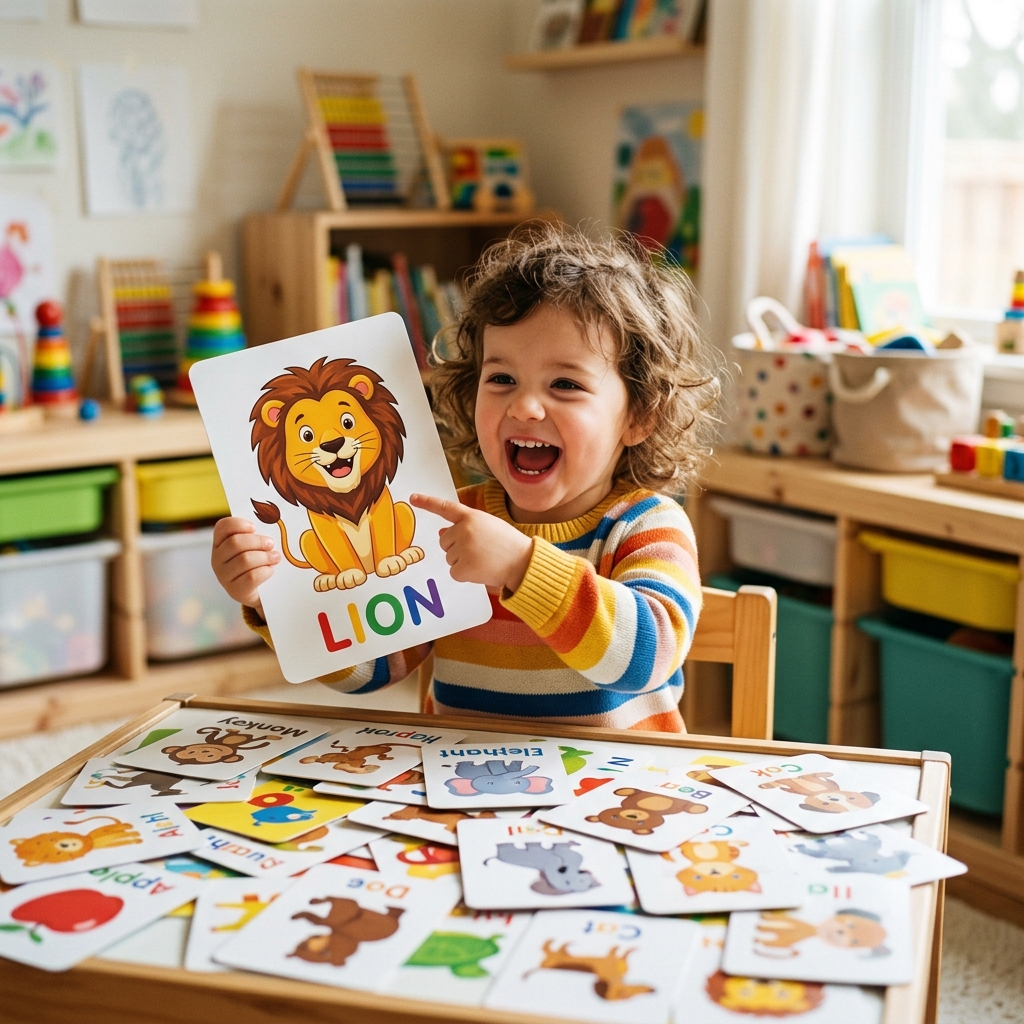
- Multilingual environment: The Montessori approach supports exposure to multiple languages at an early age. The Konus Benimle app brings this principle to life digitally with Turkish, English, and German flashcards.
Common Mistakes When Applying Montessori at Home
It is important to avoid some common mistakes when applying the Montessori method at home:
- Buying excessive materials: Expensive Montessori toys are not necessary. Everyday objects at home are the best materials.
- Perfectionism: Montessori is a lifestyle, not a perfect system. Be flexible.
- The urge to intervene: Allowing the child to make mistakes is a natural part of the learning process.
- Making comparisons: Every child develops at their own pace. Avoid comparing with other children.
- Inconsistency: Try to apply Montessori principles throughout daily life, not just during specific hours.
Scientifically Proven Benefits of Montessori Education
Research shows that children who receive Montessori education gain advantages in many areas:
- Stronger academic skills: They may be more advanced than peers in reading, writing, and mathematics.
- Superior social skills: They are more competent in cooperation, empathy, and conflict resolution.
- Strong self-regulation: They have advantages in attention span, focus, and goal-setting skills.
- Creativity: Free choice and open-ended materials support creative thinking.
- Intrinsic motivation: They tend to enjoy learning itself rather than external rewards.
Conclusion: Montessori Is Not Just an Education Method but a Life Philosophy
Applying the Montessori approach at home is one of the most valuable gifts you can give your child. Skills like independence, self-confidence, curiosity, and love of learning are core values your child will carry throughout life. You don't need to make big changes; start with small steps and observe your child's reactions. The Konus Benimle app also supports your child's language development at their own pace with visual and auditory materials, in harmony with the Montessori philosophy.