Music and Language: A Shared Path in the Brain
Music and language are two powerful communication tools that share the same brain regions. Neuroscience research has revealed that language processing areas develop more strongly in the brains of children who listen to and engage with music. This discovery places music's role in language learning on scientific foundations.
The similarities between music and language are striking: both are based on sound patterns, contain rhythm and intonation, form strong connections with memory, and serve as means of emotional expression. These shared features explain why music is such an effective tool for language learning.
Scientific Evidence: How Does Music Affect Language Development?
Phonological Awareness
Children who receive music education excel in sound discrimination skills compared to their peers. This ability, called "phonological awareness," forms the foundation of learning to read and write. A child who can distinguish rhythms and melodies in a song can more easily distinguish sounds in words.
Research from Northwestern University showed that children with music training understand speech better even in noisy environments. This skill is invaluable for listening to the teacher in a crowded classroom.
Memory Enhancement
Information learned through music is much more lasting than text-based learning. This is because music activates multiple brain regions simultaneously: the auditory cortex (processes sounds), motor cortex (responds to rhythm), limbic system (creates emotional context), and prefrontal cortex (analyzes structure).
This is why children memorize song lyrics much faster and more permanently than plain sentences. Remember the alphabet song — most adults still count the alphabet by singing!
Prosody and Intonation
Music facilitates grasping the melody of speech — that is, prosody. The rising tone of questions, the emphasis of excitement, the falling melody of sadness — these are all musical elements. Children involved in music better perceive and use these subtle nuances in speech.
Music and Language Activities by Age
Ages 0-1: Lullabies and Rhythm
Lullabies are the baby's first musical language experience. Contributions to language development:
- Creates a bond with the parent's voice
- Introduces the rhythm and melody of language
- Builds phonetic awareness through repetitive sound patterns
- Provides a safe learning environment through calming effects
Ages 1-2: Action Songs
Songs with hand and arm movements are ideal for this age. In songs with actions, movement and words are learned together. This multi-sensory experience increases word retention.
Ages 2-3: Rhyme and Repetition Songs
During this period, children develop sensitivity to rhyme. Rhyming and repetitive songs expand vocabulary and reinforce sound patterns.
Ages 3-5: Story Songs and Instruments
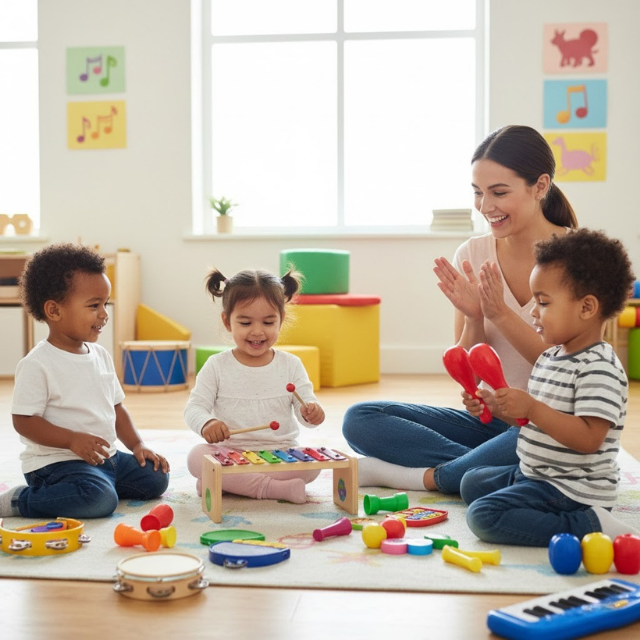
More complex songs can be used for this age group. Songs that tell stories support sentence structure and narrative skills. Making music with simple instruments (maracas, tambourine, xylophone) develops rhythm sense and coordination.
Music's Contribution to Multilingual Learning
Music is a particularly powerful tool in second language learning. Songs in different languages:
- Naturally convey the sound structure and melody of the new language
- Reinforce word and sentence patterns through repetition
- Improve pronunciation — sounds come out clearer when singing
- Provide cultural context and bring language to life
- Increase motivation — singing is fun
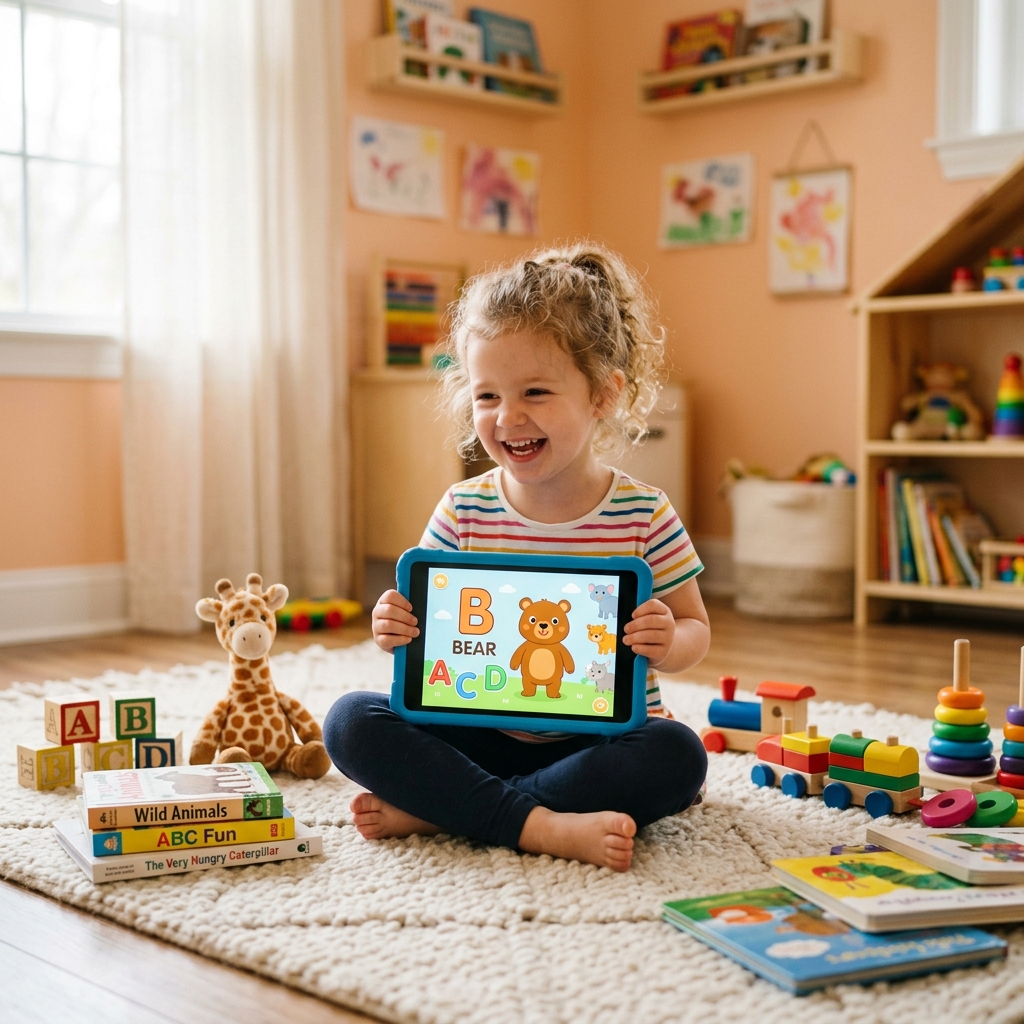
The Konus Benimle app supports vocabulary teaching in Turkish, English, and German with visual and auditory stimuli. The app's AI stories serve as a complement to musical learning by presenting learned words in meaningful contexts.
7 Musical Language Activities for Home
1. Singing Vocabulary Cards
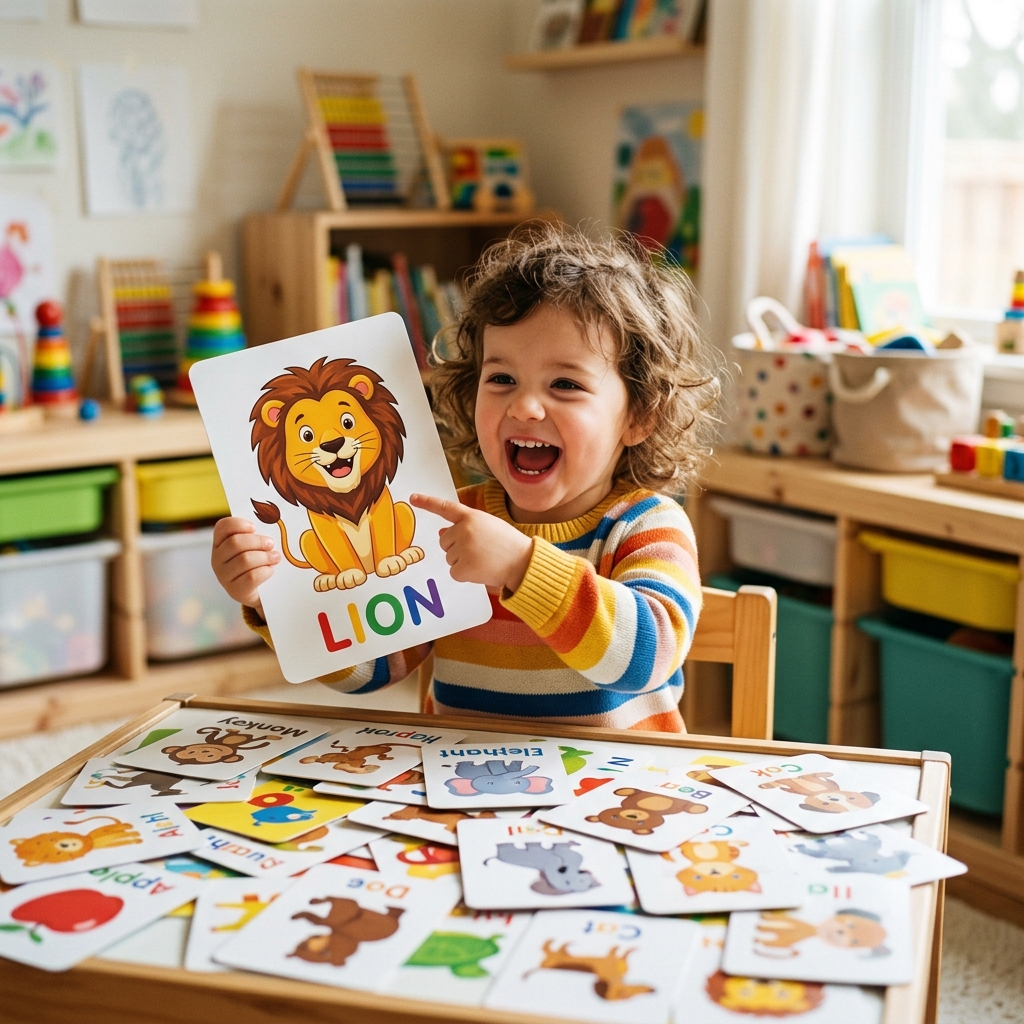
Create a short melody for each new word. Simple melodies reinforce both the meaning and pronunciation of words.
2. Rhythm and Syllable Game
Break words into syllables and clap for each one. This activity develops both rhythm sense and phonological awareness.
3. Musical Story Time
Add background music to stories. Play fast music for exciting parts, slow music for calm sections. This increases the child's interest and expands emotional vocabulary.
4. Fill-in-the-Blank Songs
Skip some words in a familiar song and wait for the child to complete them. This prediction and memory game is both fun and educational.
5. Sound Imitation Orchestra
Animal sounds, vehicle sounds, nature sounds — turn them all into a musical format. Rhythmic sound imitations reinforce word and sound knowledge.
6. Dance and Command Songs
Songs with commands like "Head, Shoulders, Knees and Toes" teach body parts and action words. Learning while dancing embeds information in muscle memory.
7. Make Your Own Song
Create simple songs with your child. Write new lyrics to familiar melodies. This creative activity is an advanced language exercise that develops word choice, sentence structure, and rhyming skills.
Effects of Music Genres on Language Development
Classical Music
While the Mozart effect is debated, classical music has been proven to extend attention spans and support cognitive development.
Children's Songs
Repetitive and rhyming children's songs are the most effective genre for language development. Simple melody and repetitive structure increase word retention.
Folk Music
Each culture's folk songs reflect the rhythm and melody of that language. Listening to folk songs in different languages opens children to linguistic diversity.
Conclusion: Every Note Is a Word, Every Melody Is a Sentence
Music is one of the scientifically proven strongest supporters of children's language learning. Rhythm strengthens phonological awareness, melody strengthens intonation, repetition strengthens memory, and emotional context strengthens meaning comprehension. Singing together, keeping rhythm, and listening to music every day — these simple activities leave lasting marks on your child's language development.
Konus Benimle supports children in learning words in 3 languages by combining visual and auditory stimuli. When you combine musical learning with app-supported learning, you create the most powerful formula for your child's language development.
Music is a universal language — and the most beautiful guide in every child's language journey.