Why Is Play the Most Effective Learning Method?
Children discover the world through play. Play is the cornerstone of child development and one of the most powerful tools when it comes to language learning. Scientific research has shown that learning through play produces results that are 40% more lasting compared to traditional memorization methods.
Why is play so effective? Because during play, the brain releases dopamine — this "happiness hormone" strengthens learning and memory processes. When a child learns while having fun, information is transferred to long-term memory much more easily. Therefore, the most natural way to support language development is to turn learning into play.
Types of Play and Their Contributions to Language Development
Symbolic Play (Role-Playing)
Children's games like "playing house," "playing doctor," or "playing shop" are invaluable for language development. During role-playing games, children:
- Learn to create dialogue in different social roles
- Find opportunities to use new words and concepts
- Develop storytelling skills
- Practice expressing emotions verbally
Research shows that children who regularly engage in symbolic play have a vocabulary that is 25% broader than their peers.
Structured Games
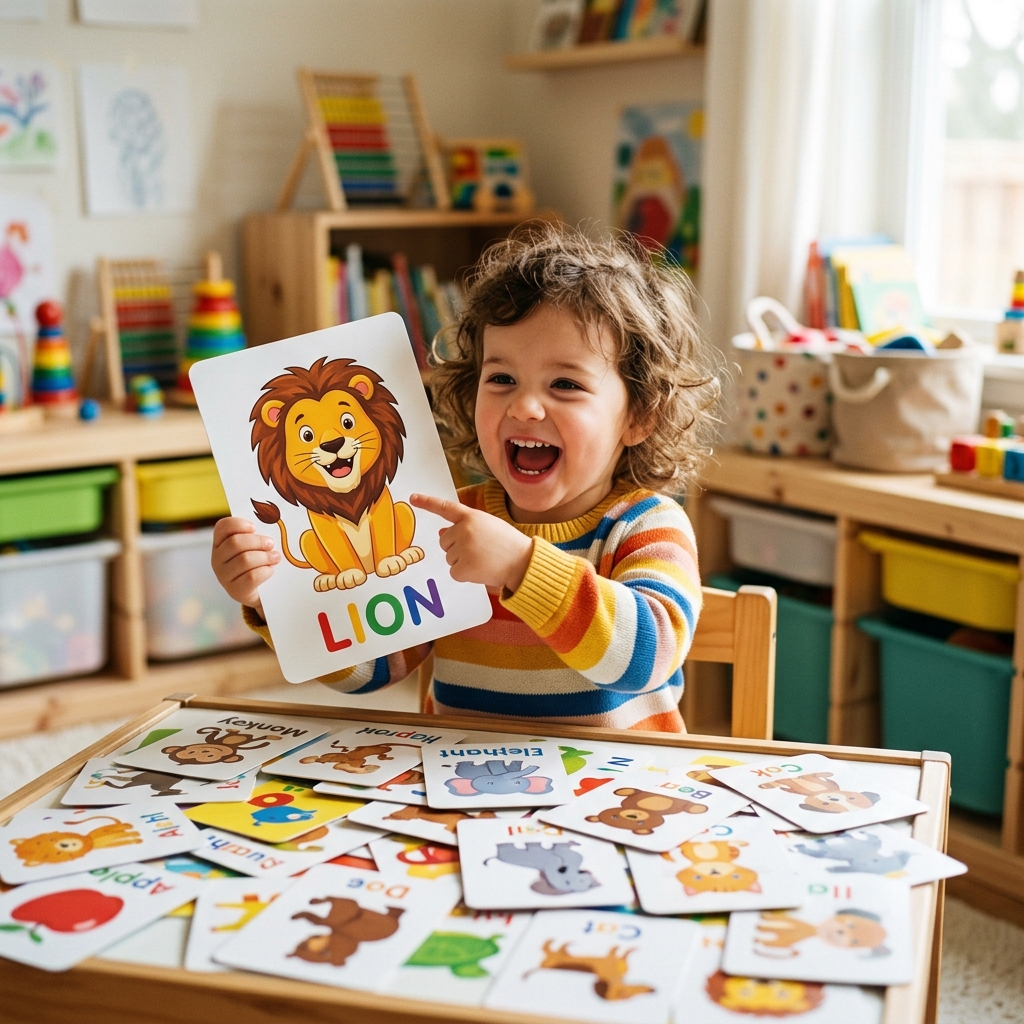
Games with rules teach children important skills beyond language development. Board games, card games, and matching games develop turn-taking, rule comprehension, and verbal communication.
For example, in a memory card game, the child says the name of the object when flipping a card, asks questions like "Was this a cat?" while trying to find its match. This process develops both vocabulary and inquiry skills.
Physical Games
Games involving movement support not only motor development but also language development. Games like "Red Light, Green Light," "Simon Says," and "Animal Charades" help children understand and follow verbal instructions. These games teach active listening, verbal direction-following, and word-action associations.
Musical and Rhythmic Games
Songs, rhymes, and rhythm games are powerful supporters of language development. Music's contribution to language learning has been scientifically proven:
- Rhythm sense helps grasp the natural flow of speech
- Repetitive songs reinforce words
- Rhyming songs develop phonological awareness
- Action songs strengthen word-meaning connections
Age-Appropriate Language Development Game Suggestions
0-1 Year: Sensory Exploration Games
The most effective language games for babies are based on sensory experiences:
- Peekaboo: Teaches object permanence and simple verbal patterns
- Finger plays: Songs like "Five Little Monkeys" teach rhythm and vocabulary
- Touch-and-feel books: Children learn object names while experiencing different textures
- Sound imitation games: Imitating animal sounds and environmental sounds expands the sound repertoire
1-2 Years: Interactive Exploration Games
During this period, children actively explore their surroundings and begin connecting words with objects:
- Object naming: Pull objects from boxes for a "What's this?" game
- Picture book interaction: Point to pictures and ask "Where's the cat?"
- Simple puzzles: Name colors and shapes while placing pieces
- Bubble game: Teach words like "up," "down," and "pop" while chasing bubbles
2-3 Years: Imagination Games
In this age group, imagination develops rapidly and games become more complex:
- Toy kitchen: Food names, actions, and adjectives are taught during cooking pretend play
- Puppet theater: Creating simple stories develops dialogue and narrative skills
- Color and shape hunt: Instructions like "Find something red" reinforce color, shape, and spatial concepts
- Block building: Instructions like "Put the big block on top of the small one" teach concepts
3-5 Years: Social and Rule-Based Games
In the preschool period, children begin using more complex language structures:
- Story cards: Sequencing cards to create stories — develops narrative skills
- 20 questions: Asking "Yes/No" questions develops logical thinking and question-forming skills
- Word chain: Finding words starting with the last letter — expands vocabulary
- Profession game: Imitating different professions teaches job vocabulary and related concepts
Digital Game Tools and Language Development
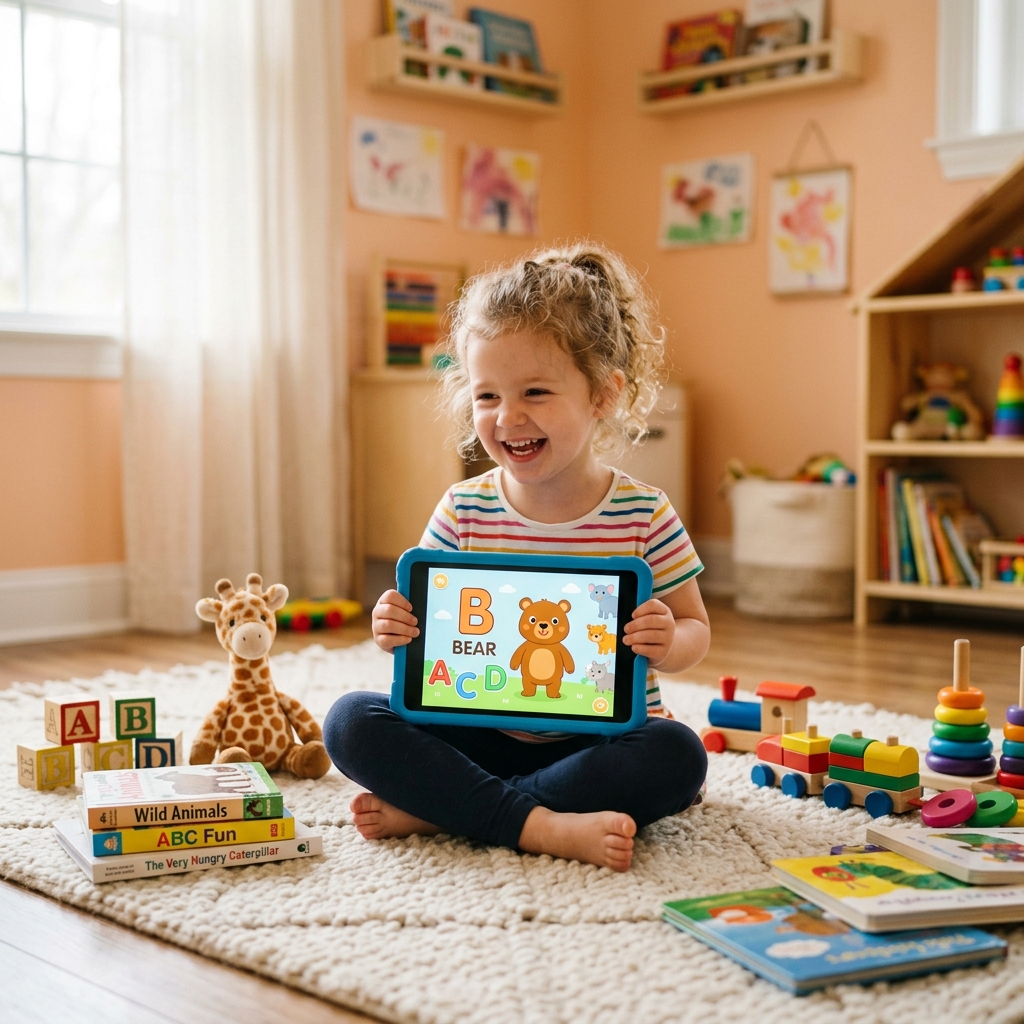
When used correctly, technology can be a powerful tool supporting language development. Advantages of digital game tools:
What Is Gamification?
Gamification is the addition of game mechanics to learning processes. Elements like collecting points, leveling up, and earning badges increase the child's motivation and make learning sustainable.
The Konus Benimle app successfully integrates gamification principles into language teaching:
- Visual vocabulary cards: Colorful and engaging visuals strengthen word-meaning connections
- Level system: Beginner, intermediate, and advanced levels allow children to progress at their own pace
- AI stories: Personalized stories created with learned words provide contextual learning
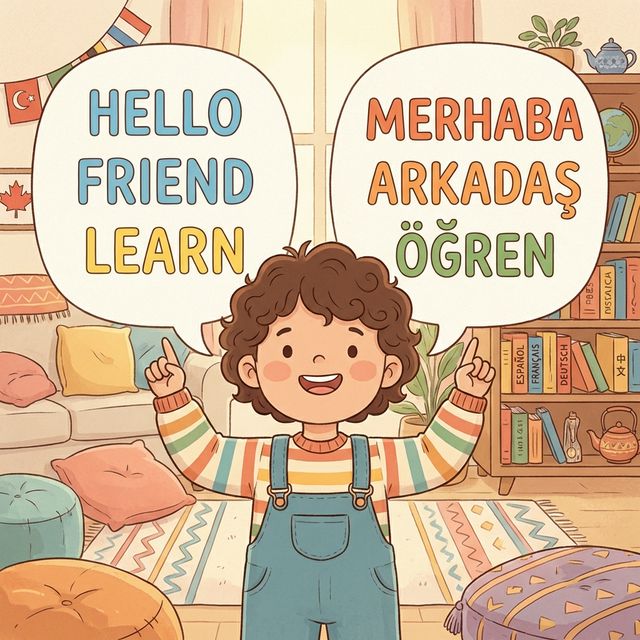
- Multilingual support: Switching between Turkish, English, and German supports multilingual learning
Balancing Digital and Physical Play
The most effective language development is achieved through a balanced use of digital and physical play. Experts recommend this balance:
- Dedicate 70-80% of daily play time to physical games
- Limit digital games to 15-20 minutes per day
- Provide parental guidance during digital play when possible
- Reinforce words learned in the app through daily life usage
The Role of Parents During Play
Parents' attitude during play directly affects its contribution to language development:
What You Should Do
- Get down to your child's level: Physically come to eye level and communicate on the same plane
- Follow, don't direct: Follow the child's interest; let the child lead the play
- Comment: Narrate what the child is doing — "You're placing the red block"
- Expand: Repeat what the child says in longer sentences
- Wait: Give the child time to respond; don't immediately provide the answer
What You Should Avoid
- Constantly asking questions — this puts pressure on the child
- Saying "No, that's wrong" — this breaks motivation
- Saying the word for the child — give them a chance to find it themselves
- Turning play into a test — fun should be the priority
Conclusion: Playing Is Not Wasted Time, It's an Investment
Play is the most powerful and natural tool in children's language development. Every moment of play creates new connections in the child's brain, expands vocabulary, and strengthens communication skills. A balanced use of physical games, role-playing, music, and digital tools comprehensively supports your child's language development.
Konus Benimle combines play and technology to make children's language learning journey fun and effective. With gamified vocabulary cards, AI stories, and a level system, it ensures every child learns at their own pace and with enjoyment.
Playing with your child is the most valuable gift you can give — because every game is a learning opportunity.