What Is Positive Discipline?
Positive discipline is an approach that teaches children boundaries and social rules, but does so through respect, empathy, and mutual understanding rather than punishment, fear, or shame. This method focuses not on controlling behavior but on helping children develop the ability to manage their own actions.
In traditional discipline, the goal is obedience. In positive discipline, the goal is to nurture intrinsic motivation and raise an individual capable of making good decisions. Research shows that children raised with positive discipline develop stronger self-regulation skills, higher self-esteem, and healthier social relationships.
The Difference Between Punishment and Positive Discipline
Understanding the core differences between punishment and positive discipline is the first step toward applying this approach correctly:
- Punishment: Focuses on stopping behavior through fear. Positive discipline: Focuses on understanding the cause and teaching alternatives.
- Punishment: Achieves short-term compliance. Positive discipline: Aims for long-term behavioral change.
- Punishment: Relies on parental power. Positive discipline: Relies on mutual respect and cooperation.
- Punishment: Can create anger and rebellion in children. Positive discipline: Fosters responsibility and empathy.
Core Principles of Positive Discipline
1. Mutual Respect
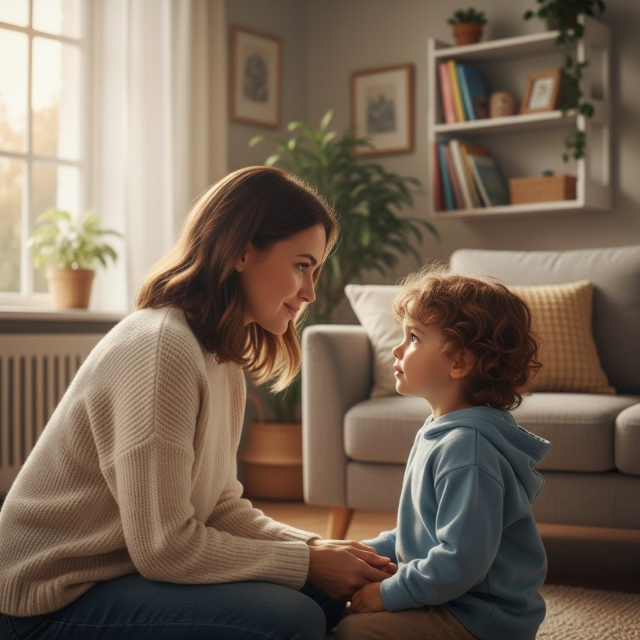
The foundation of positive discipline is respecting the child as an individual. This does not mean giving up on boundaries. Rather, it means setting limits clearly and consistently while also validating the child's feelings. Phrases like "I can see you are angry, and I understand that. But hitting is not acceptable" offer both empathy and a firm boundary simultaneously.
2. Firmness with Kindness
One of the most important principles of the positive discipline model, developed by Jane Nelsen, is being kind and firm at the same time. Kindness means respecting the child's emotions, while firmness means not compromising on established rules. When this balance is achieved, the child feels both safe and loved.
3. Belonging and Capability
Behind every behavior lies a need. Children need to feel that they belong and that they are capable. Negative behaviors most often emerge when these needs go unmet. Positive discipline seeks to discover the need beneath the behavior rather than simply suppressing it.
Practical Positive Discipline Techniques
Natural and Logical Consequences
Instead of punishing, allow children to experience the results of their own actions. Natural consequences occur without parental intervention: if they refuse to wear a coat, they feel cold. Logical consequences are parent-created outcomes directly related to the behavior: a child who does not put away toys cannot play with those toys for the rest of the day.
- Consequences should be related, respectful, and reasonable
- Explain in advance: "If you do not pick up your toys, I will put them away for today"
- Stay calm and consistent when enforcing consequences
- Avoid blaming or mocking the child
Offering Choices
Giving children limited choices provides a sense of control and increases cooperation. Two-option questions such as "Would you like to brush your teeth first or put on pajamas first?" give children decision-making practice. Make sure both options are acceptable to you. Avoid open-ended questions like "What do you want to do?" which can be overwhelming for young children. The key is structuring choices so the child feels empowered while you maintain the overall framework.
Calm-Down Space (Time-In)
The traditional "time-out" method isolates the child and can create feelings of rejection, while the "time-in" approach helps the child manage emotional storms together with a parent. Create a calm-down area at home with soft cushions, a feelings wheel, and a few books. When your child is upset, go to this space together and help them express their emotions.
Naming Emotions
Helping children recognize and express their feelings is one of the most powerful tools of positive discipline. Use statements like "It seems like you are really frustrated because you had to wait for your turn" to help your child match inner experiences with words. This skill is critical for both emotional intelligence and language development. The stories and vocabulary cards in the Konus Benimle app can also help your child learn emotion-related words across multiple languages.
Age-Appropriate Positive Discipline Strategies
Ages 1-2 (Babies and Toddlers)
At this stage, children cannot yet fully understand rules; they want to explore. The primary strategy is creating a safe environment and using redirection.
- Remove dangerous objects from reach
- Offer alternatives instead of prohibitions: "Not on the wall — you can draw on this paper"
- Use short, clear phrases: "Gentle hands," "Slow feet"
- Notice and celebrate positive behaviors
Ages 3-4 (Preschool)
Children in this age group want independence but still need strong guidance. Emotional outbursts and stubbornness are common.
- Use the choice-offering technique frequently
- Establish routines and support them with visual charts
- Help them name their feelings: "I can see you are disappointed"
- Prefer positive redirections over "no": Instead of "Stop running," try "Please walk"
- Practice problem-solving together
Ages 5-6 (School Readiness)
At this stage, children better understand cause and effect and begin questioning the reasoning behind rules. They want to know "why" and deserve honest, age-appropriate answers. Providing explanations increases cooperation and builds critical thinking skills.
- Set rules together and discuss the reasons behind them
- Use logical consequences more actively
- Assign responsibilities: setting the table, feeding a pet
- Teach apologizing and making amends
Positive Discipline and Language Development
Positive discipline is not only about behavior management; it is also an approach that strengthens a child's language and communication skills. When you set boundaries through conversation, name emotions, and offer choices, you are simultaneously expanding your child's vocabulary and expressive ability.
Children with strong language skills are less likely to resort to physical aggression because they can express their emotions verbally. This is why positive discipline and language development mutually reinforce each other. The Konus Benimle app strengthens your child's language skills with vocabulary and story content in Turkish, English, and German, thereby also increasing their capacity for emotional expression.
Common Mistakes Parents Make
Even parents who embrace positive discipline can fall into common traps:
- Avoiding boundaries altogether: Positive discipline does not mean permissiveness. Being kind does not mean saying yes to every request.
- Inconsistency: Rules that are enforced one day and ignored the next create confusion in children.
- Over-explaining: Long speeches are ineffective, especially with young children. Keep it short, clear, and calm.
- Starting calm but reverting to punishment when frustrated: It is easy to fall back on old habits when tired or stressed. Give yourself grace too.
- Perfectionism: Making mistakes is normal. What matters is recognizing the mistake and trying to correct it.
- Inconsistency between parents: When caregivers apply different rules, it puts strain on the child. Agree on a shared approach.
Daily Routines and Consistency
The most powerful ally of positive discipline is consistent daily routines. Children feel secure when they know what to expect, and following rules becomes easier.
- Morning routine: Visualize wake-up, dressing, and breakfast steps with a chart
- Mealtime routine: Set table rules together; focus on trying rather than finishing everything
- Evening routine: Create a sequence of tidying up, bath, reading, and bedtime
- Transition warnings: Use prompts like "Five minutes until clean-up time" to ease transitions
Prepare routine charts together with your child and include their ideas. When children participate in creating routines, they feel ownership and are far more likely to follow through. This way, the child gains internal motivation to follow the rules on their own.
Conclusion: Boundaries with Love, Guidance with Respect
Positive discipline is not a magic formula that promises perfect results overnight. It is a journey that requires patience, consistency, and self-awareness. But every step you take on this journey contributes to your child growing into a confident, empathetic, and responsible individual.
Remember: the word "discipline" comes from "discipulus," meaning "learner." True discipline is not about punishing — it is about teaching. By incorporating educational tools like Konus Benimle into this process, you can support your child's cognitive and emotional development in a holistic way.
The most effective discipline is the kind where the child feels loved.